AI Dungeon Alternatives: 5 Story Tools Compared (2026)
Summary
Looking for AI Dungeon alternatives that remember your lore? We compared NovelAI, Hidden Door, KoboldAI, Novelcrafter and Character.AI on price, memory tools, freedom to improvise, filtering and setup. NovelAI wins for prose quality and lorebook-driven continuity, Hidden Door for coherent guided stories, and KoboldAI for free, private play. Your choice depends on why you are leaving: memory, writing quality, filters or cost.
Verdict. Among AI Dungeon alternatives, NovelAI fixes what players most often leave over: forgotten characters and flat prose. Hidden Door keeps a guided story coherent inside licensed worlds, KoboldAI wins on price and privacy, and Novelcrafter serves writers whose campaign is turning into a manuscript. Character.AI is easiest to start, but it gives you the least control over memory.
Why players leave AI Dungeon
Forty turns into a heist, the guard captain you named in turn three has quietly become a different person. Every GM and writer who has used a blank-page text adventure knows that moment. AI Dungeon remains the original of the genre, and its Story Cards, Memory Bank and summaries are real steering tools. The problem is structural: on the free Wanderer tier the context is 4k tokens, and even the paid tiers top out between 8k and 32k before the largest plans. Anything that scrolls out of context stops being canon.
That is why this comparison is organised around one question instead of a feature checklist. Canon is a promise, and every inconsistency breaks it. The tools below break that promise in different ways, and fix it in different ways too.
How the five alternatives differ
The five tools split into three camps. NovelAI and Novelcrafter are writing tools with strong lore databases. Hidden Door is a narrated game with authored scaffolding. KoboldAI and Character.AI sit at opposite ends of control: one hands you every setting and a blank interface, the other hands you a catalog and almost no settings at all.
The criteria table above shows the numbers side by side. A few differences are worth pulling out because they change what a session feels like.
Memory is a design choice, not a number
NovelAI and KoboldAI both use a lorebook: you write entries for characters, factions and places, and the tool injects them when the text mentions them. Novelcrafter goes further with its Codex, where each entry can be set to always include, include when mentioned, or never. Hidden Door sidesteps the problem by fixing the world and cast in advance, so the model has less to invent and less to forget. A larger context window delays drift. It does not decide which facts are still true.
Freedom costs coherence
The more a tool lets you improvise, the more of the bookkeeping lands on you. AI Dungeon and KoboldAI give you a blank page. Hidden Door gives you a world and a deck of narrative moves, and you cannot be the author of everything mid-scene. Neither approach is wrong. A one-shot at a convention table wants the blank page. A campaign you will return to for months wants scaffolding.
Which alternative fits which problem
If your complaint is prose, pick NovelAI. If it is coherence, look at Hidden Door first. If it is the monthly bill or the filters, KoboldAI is the answer, and the price of that answer is setup time. If you are really writing a book set in your world, Novelcrafter's Codex is the closest thing to a living campaign bible on this list.
Sudowrite is not an AI Dungeon alternative, since it is a drafting partner rather than a text adventure. It is worth knowing about if your goal is polished fiction from your campaign notes rather than interactive play.
What none of them replace
Every tool here is assisted generation. The model proposes, and the GM or writer decides what enters the Codex. None of the five will keep a faction's motivations honest unless someone writes those motivations down and keeps them current. The tools differ in how little friction that upkeep takes, and that is the real axis of comparison.
What to check before you subscribe
Pricing and limits change often in this category. Before paying, run one short adventure on the free tier or trial where one exists, and test the specific failure that made you leave: introduce a minor character, wait fifteen turns, then see whether the tool still knows their name and motive. That single test says more than any feature list. Check the content settings against your table's expectations as well, since filtering ranges from strict on Character.AI to model-dependent on KoboldAI.
What this means for your next campaign
The honest summary is that no alternative removes the work of keeping canon. Each one moves that work somewhere else: into a lorebook, into a licensed world, into a model you host yourself. Choose the place where you would rather do the upkeep.
At-a-glance
| NovelAI | Hidden Door | KoboldAI | Novelcrafter | Character.AI | |
|---|---|---|---|---|---|
| Price (entry to top tier) | No ongoing free tier; $10, $15 or $25 a month | Free (5 worlds); Fan $7.99, Creator $19.99 a month | Free; local use costs only your own hardware | Roughly $4 to $20 a month, plus your own AI provider bill | Free with ads; c.ai+ $9.99 a month |
| Lore and memory tools | Lorebook, Memory and Author's Note fields | Fixed world canon, with persistent characters and items tracked as cards | World Info entries (lorebook), Author's Note, plus whatever the model remembers | Codex database with always-include, mentioned-only and never settings | Character persona and chat memory; enhanced memory on c.ai+ |
| Freedom to improvise | High: you steer a co-written text, closer to a manuscript than a game | Moderate: you play inside licensed or public-domain worlds | Total: adventure, story and chat modes, no catalog | High for drafting, but built around authored scenes, not turn-by-turn play | Moderate: character chat first, narrated Stories mode second |
| Content filtering | No moderation stated; 18+ terms | Maturity levels set per world; mature content on the free tier | None on the front end; depends on the model you connect | Set by the AI provider you plug in | Strict; mature content is restricted |
| Setup effort | Low, with some learning for the Lorebook | Low: pick a world and start | Low on the web Horde, high if you self-host a model | Real setup time before the Codex pays off | Lowest: sign up and pick a character |
| Best for | Prose quality and lorebook-driven continuity | Stories that hold together inside a known world | Free, private, self-hosted play | Novel-length canon and series bibles | Casual roleplay chat on mobile |
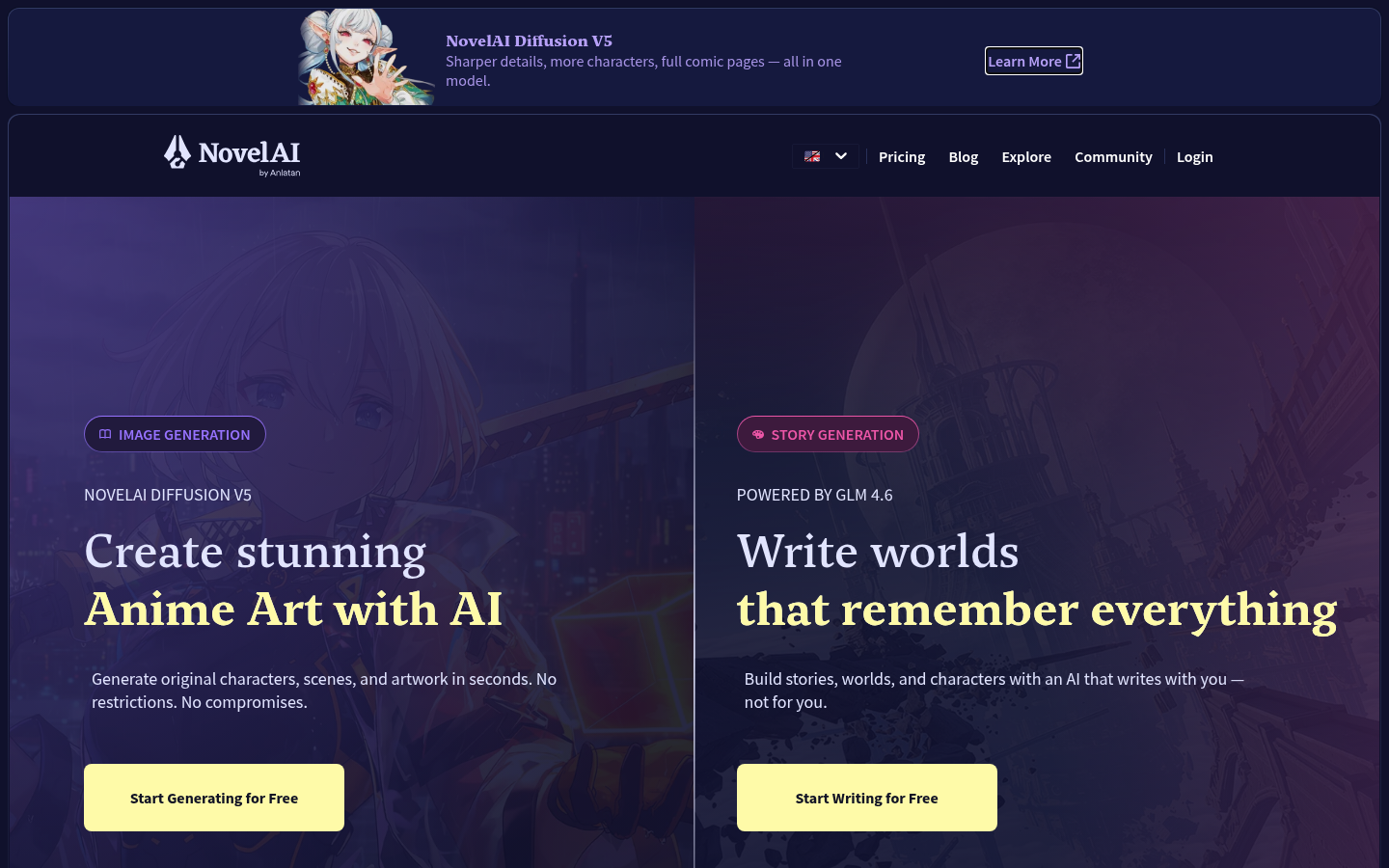
NovelAI
- Lorebook pins down characters, factions and world rules across long text
- Models tuned for fiction read richer than generic chat output
- Opus tier adds unlimited anime-style image generation under fair use
- No permanent free tier, only a one-time trial
- Feels like a writing studio, not an adventure game
- The best text model sits on the $25 Opus tier
Best pick for anyone who left AI Dungeon over writing quality or forgotten lore.

Hidden Door
- Fixed world and cast keep the narrative from dissolving
- Real licensed worlds such as Dracula and Call of Cthulhu carry canon
- Generous free tier with unlimited turns and mature content
- Free tier caps you at five worlds and one character chat a day
- Less improvisational freedom than a blank prompt
- Younger platform with a smaller world catalog
The inverse of AI Dungeon: you lose the blank page and gain a story that stays coherent.
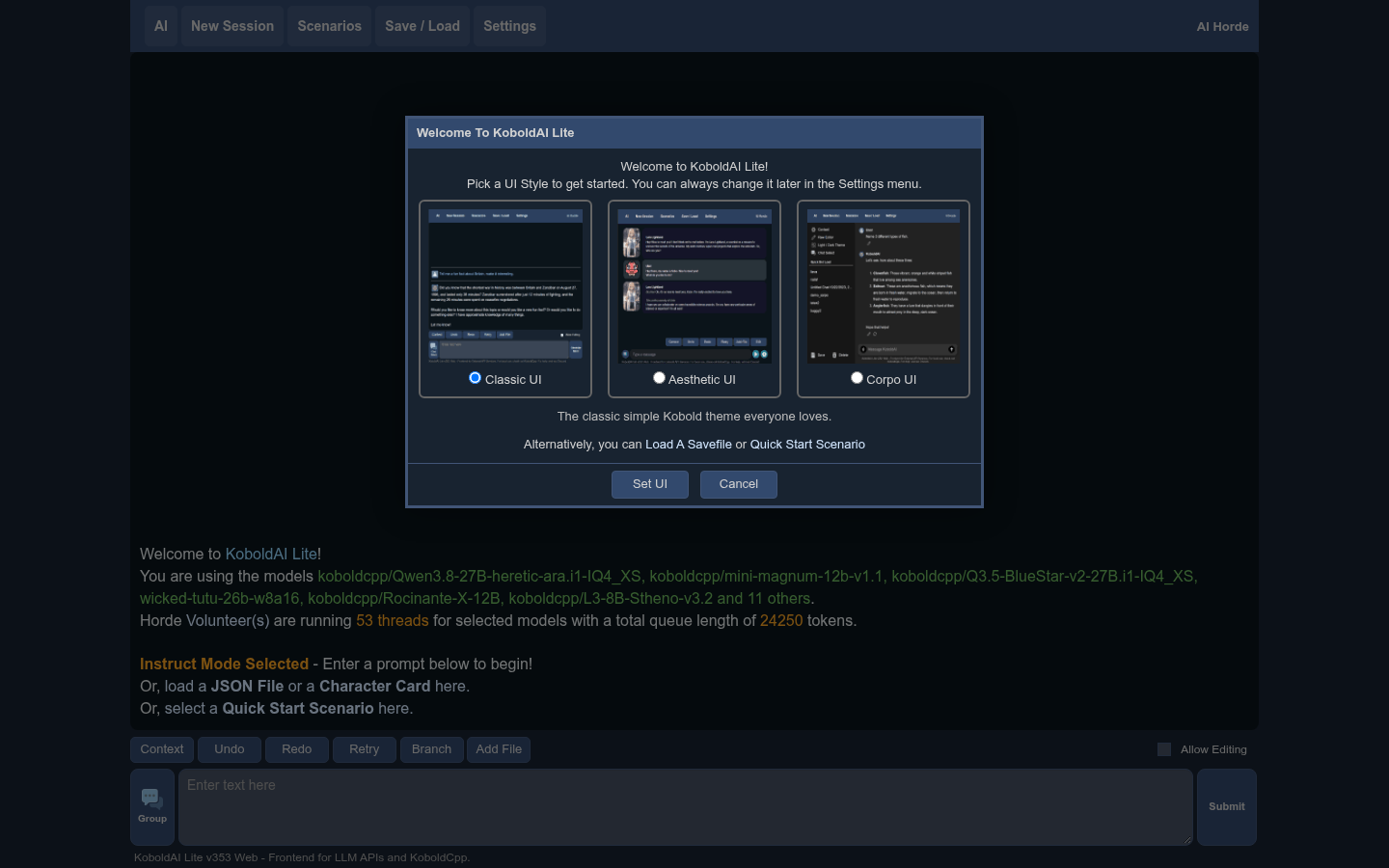
KoboldAI
- Free web front end with no account required
- Run KoboldCPP locally and no company can change terms or filters
- Adventure, Story and Chat modes with World Info entries
- Good local speed needs a capable GPU, and the free Horde queue slows at peak hours
- Utilitarian interface with no curated catalog
- Output quality depends entirely on the model you connect
The tinkerer's route: cheapest and most private, but you build the table yourself.
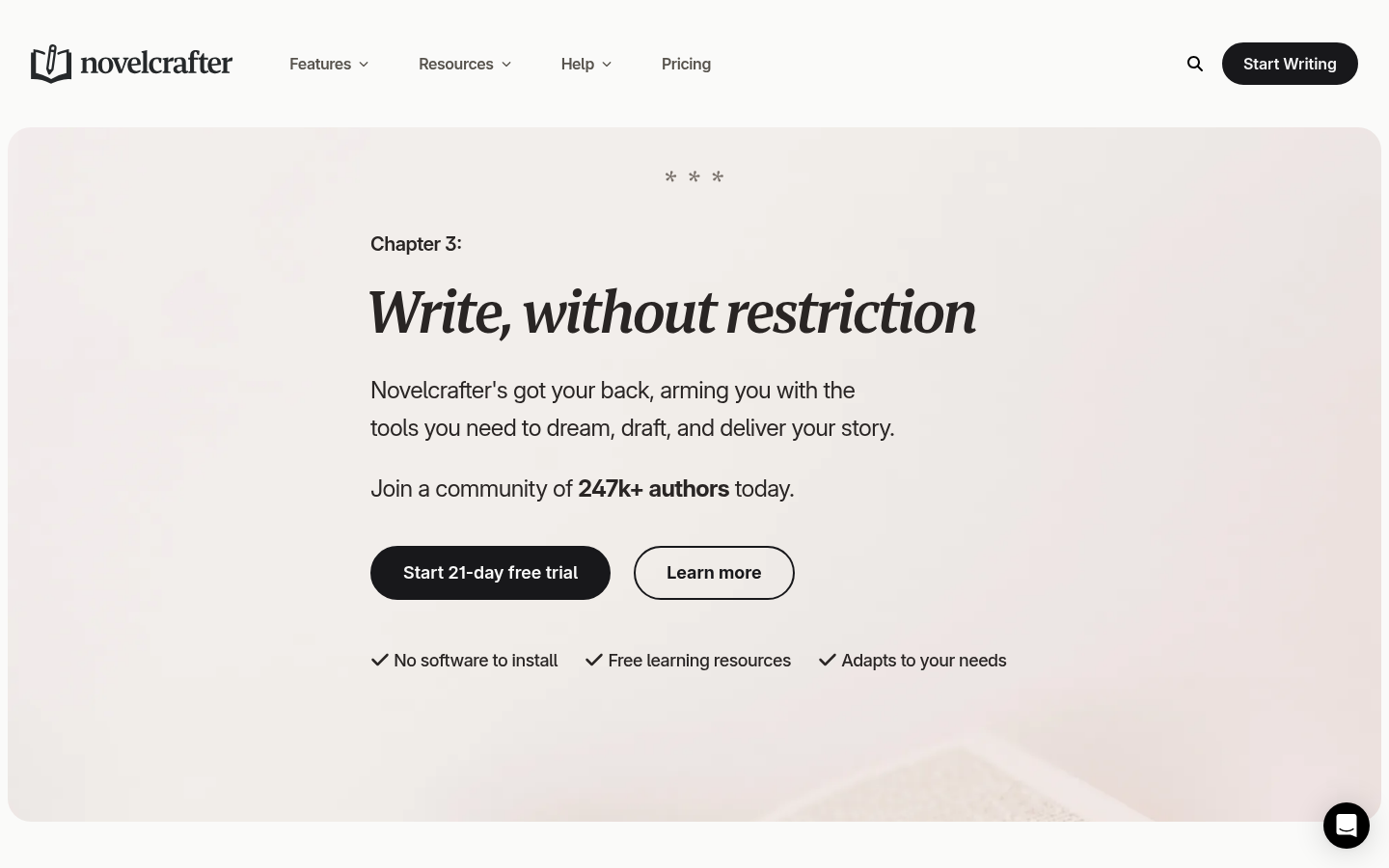
Novelcrafter
- Codex entries control exactly what reaches the model on each scene
- Model-agnostic: switch between GPT, Claude, Gemini or a local model
- Shared story bibles, pen names and exports to DOCX and Markdown
- Real setup time before the Codex pays off
- Two bills: the platform plus your AI provider
- Built for drafting scenes, not turn-by-turn play
Not a game at all, but the strongest lore-first option if your campaign is turning into a manuscript.
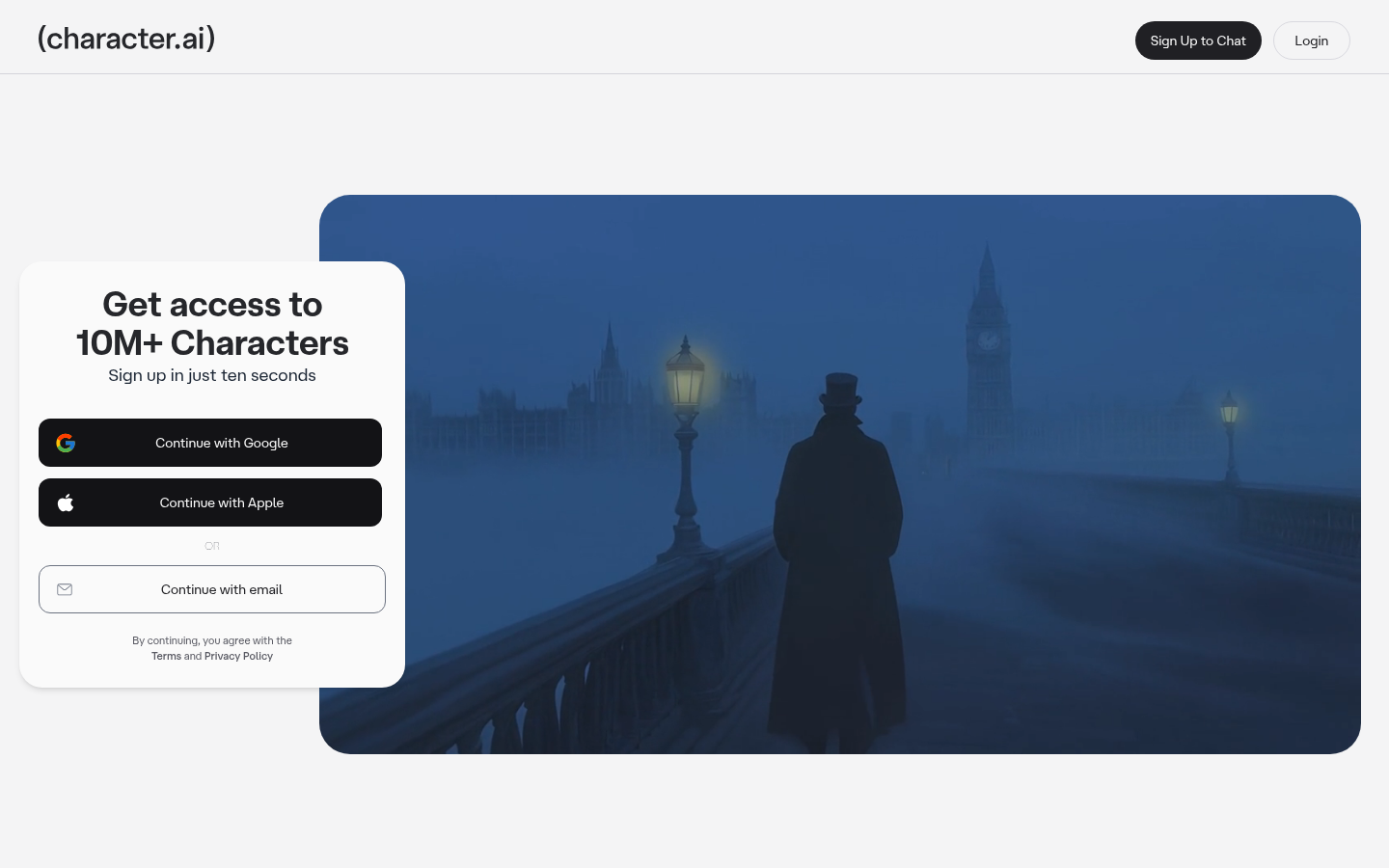
Character.AI
- Huge catalog of ready-made characters, over 10 million
- Stories mode adds a narrated, choice-driven format
- Strong mobile apps and voice calls
- Stricter moderation than AI Dungeon or KoboldAI
- Free tier ads and swipe caps push active players to c.ai+
- Less control over narrative structure and world memory
Easiest to start, but it is a chat product first and a text adventure engine a distant second.
Verdict
NovelAI is the alternative that fixes what most players actually leave AI Dungeon for: forgotten characters and flat prose. Hidden Door suits players who want a story that never falls apart, KoboldAI wins on price and privacy, and Novelcrafter serves lore-heavy writers. Character.AI is the easy mobile option, but it trades away control over memory and structure.
How we tested
This is a desk-based comparison, not a claim of long hands-on campaigns. We compared each product's published pricing, plan limits and documentation as of October 2026, checked each homepage directly, and cross-read independent roundups and community discussion for recurring complaints. Each criterion was judged against one question a GM or writer asks: does the tool hold a canon over many sessions? Scores run 0 to 5 and are editorial judgments, not averaged review data. Only AI Dungeon had a store rating we could verify. No product paid for placement, and none of these links is an affiliate link.