Character AI Alternatives for GMs and Worldbuilders (2026)
Summary
Looking for Character.AI alternatives that can hold a campaign together? We compared five options for GMs and fiction writers on lore memory, character control, price and moderation. NovelAI wins for persistent canon, SillyTavern gives the most control, Janitor AI is the closest casual swap, AI Dungeon suits improvised scenes and Sudowrite serves manuscripts. All pricing is as of November 2026.
Short verdict: among Character AI alternatives for a campaign, NovelAI is the one to try first. Its lorebook and adjustable context memory keep factions, names and rules stable over many sessions, which is exactly where Character.AI drifts. SillyTavern gives GMs more control at the cost of setup, Janitor AI is the nearest casual swap, AI Dungeon fits improvised scenes, and Sudowrite fits novelists.
Why GMs and writers outgrow Character.AI
Character.AI is built for conversation. You open a character, talk, and swipe until the reply feels right. That is a fine loop for a quick scene, and it is why the catalog passes 10 million characters. It is a poor loop for a campaign, because the character has no lorebook behind it. Ask the same innkeeper about the same guild six chats apart and the answers will not agree.
Three frictions come up again and again for people running long games or drafting novels. First, memory: c.ai+ adds enhanced memory and longer personas, but there is no place to pin canon that every chat must respect. Second, moderation: mature themes that belong in a dark fantasy or horror campaign are restricted more tightly than in dedicated interactive-fiction tools. Third, ownership: you borrow someone else's character instead of building a cast that belongs to your Codex.
None of this makes Character.AI a bad product. It makes it a product for a different job. The alternatives below are ranked by how well they hold a world together, not by how many bots they host.
How we compared them
We kept the field to five tools that a worldbuilder could realistically adopt, plus Character.AI as the anchor. The criteria are the five rows in the table above: entry price, lore and memory tools, how characters work, moderation and platform. The methodology section below explains what we did and did not test. Prices are the published ones for November 2026 and change often, so check the plan page before paying.
NovelAI: the pick for persistent canon
NovelAI is the closest match to what a GM needs from a character engine. The text side is built around a lorebook and adjustable context memory, so you decide which facts the model must see on every generation. You write your characters instead of browsing a public catalog, which suits anyone who already keeps a campaign bible.
The trade-offs are real. There is no permanent free tier, only a one-time 30-generation image trial, and text quality and context size scale with the plan. Tablet is $10 a month, Scroll is $15, and Opus at $25 adds the top text model and unlimited image generation within fair use. Its anime-focused image generator is a bonus for portraits, not a general illustration tool. G2 shows a 4.6 out of 5 average for NovelAI, which fits our read: people who need long-form control tend to stay.
SillyTavern: maximum control, real setup cost
SillyTavern is not a service. It is a free, open-source frontend you install locally, then connect to a model of your choice, either a local model or a paid API. In return you get World Info lorebooks, group chats that put several characters in the same scene, and extensions for auto-summary, text-to-speech and images.
For a GM who wants three NPCs arguing in one room, group chat is the feature that matters. The cost is yours to carry: Node.js 20 or later, a model backend, and responsibility for security, because chat history and API keys sit in plain text on the host machine. There is no mobile app and no catalog. If you enjoy owning the stack, it is the deepest option here. If you want to start in ten seconds, skip it.
Janitor AI: the closest like-for-like swap
Janitor AI looks and feels like Character.AI: a huge public library of community bots, many of them RPG and game-world characters, a free built-in chat model and iOS and Android apps. The free tier has no message cap, with a context of about 9k tokens. janitor+ costs $12.99 a month, or $99 a year, and raises context roughly fivefold.
It also inherits the same weakness. Bot quality varies sharply, free-tier memory is short, and moderation is lighter than at mainstream platforms, which cuts both ways. Treat it as the right move when you want the same casual chat with fewer restrictions, not as a campaign-management tool. You can connect your own model API, which narrows the gap if you already pay for one.
AI Dungeon: improvised scenes with steering tools
AI Dungeon from Latitude is the original blank-page text adventure. You type a premise and the narrator improvises. Story Cards, Plot Essentials, Story Summary and Author's Notes let you steer tone and continuity, and the Memory Bank grows from 25 entries on the free Wanderer tier to 800 on Ultimate.
That tiering is the catch. Wanderer has a 4k context that trims long adventures quickly, and the stronger models sit behind Mythic at $49.99 and Ultimate at $99.99 a month. Journey starts at $14.99. For one-shot improvised scenes it is excellent. For a 40-session canon it needs careful card maintenance, and coherence still drifts without it.
Sudowrite: for the manuscript, not the chat
Sudowrite is the odd one out, and we include it deliberately. If your reason for chatting with characters was to find their voice before writing a novel, Sudowrite does that work inside the manuscript. The Story Bible carries characters and settings into every scene, and Write, Describe, Expand and Rewrite operate at scene level. The Feedback tool critiques each draft.
It does not offer live character chat, and it is fiction only. Plans run from $10 a month for Hobby & Student to $22 on Professional with annual billing. Some users report billing mix-ups when cancelling, so keep an eye on renewals. Choose it when the deliverable is prose, not a conversation.
Which one should you pick
Match the tool to the job rather than the hype. For a long tabletop campaign with persistent factions, NovelAI. For maximum control and several NPCs in one scene, SillyTavern, if you will do the setup. For a free, casual Character.AI replacement, Janitor AI. For improvised solo scenes, AI Dungeon. For a novel, Sudowrite.
One reality check: none of these tools replaces a GM's judgment. They generate fast, and the faction motivations still need a human pass. Whichever you choose, keep the canonical facts in your own Codex and paste them in, because a lorebook only helps if the facts inside it are right.
Privacy and safety notes
Character-chat platforms store conversations on their servers, and policies differ. Read the data policy before you paste unpublished lore or a manuscript. SillyTavern keeps data local but stores history and API keys unencrypted, so protect the machine it runs on. If you share a device with younger players, note that Janitor AI and NovelAI have lighter moderation than Character.AI by design.
What this comparison leaves out
We did not include companion-style apps, because their goal is a relationship with one persona rather than a cast for a world. We also left out developer platforms for embedding NPCs inside shipped games, which serve studios, not table GMs. If your keyword intent was a game-engine NPC system, this list is the wrong map.
At-a-glance
| NovelAI | AI Dungeon | Janitor AI | SillyTavern | Sudowrite | |
|---|---|---|---|---|---|
| Entry paid price | Tablet at $10/mo; Opus at $25/mo; no permanent free tier | Journey at $14.99/mo; free Wanderer tier with 4k context | janitor+ at $12.99/mo ($99/yr); free tier with no message cap | Software is free (AGPL-3.0); you pay for the model API or hardware | Hobby & Student at $10/mo; Professional at $22/mo on annual billing |
| Lore and memory tools | Lorebook and adjustable context memory built for long fiction | Story Cards, Plot Essentials and Memory Bank (25 to 800 entries by tier) | About 9k tokens of context free; roughly 5x more on janitor+ | World Info lorebooks, group chats and auto-summary extensions | Story Bible and Canvas that feed every scene generation |
| How characters work | You build your own characters and worlds; no public bot catalog | Blank-page adventures; NPCs are improvised by the narrator | Hundreds of thousands of community bots, plus bring-your-own-model | Character cards you import or write; several characters in one chat | Characters live in the Story Bible and serve prose, not live chat |
| Content moderation | Few restrictions compared with mainstream assistants | Looser than Character.AI, still platform-moderated | Lighter moderation; quality and tone vary by bot | Depends entirely on the model you connect | Standard model-provider limits; non-judgmental by design |
| Platform and setup | Web app for text and anime-style image generation | Web and mobile app; huge library of published scenarios | Web plus iOS and Android apps | Local install (Node.js 20+); no hosted service or mobile app | Web app for fiction projects; fiction only |
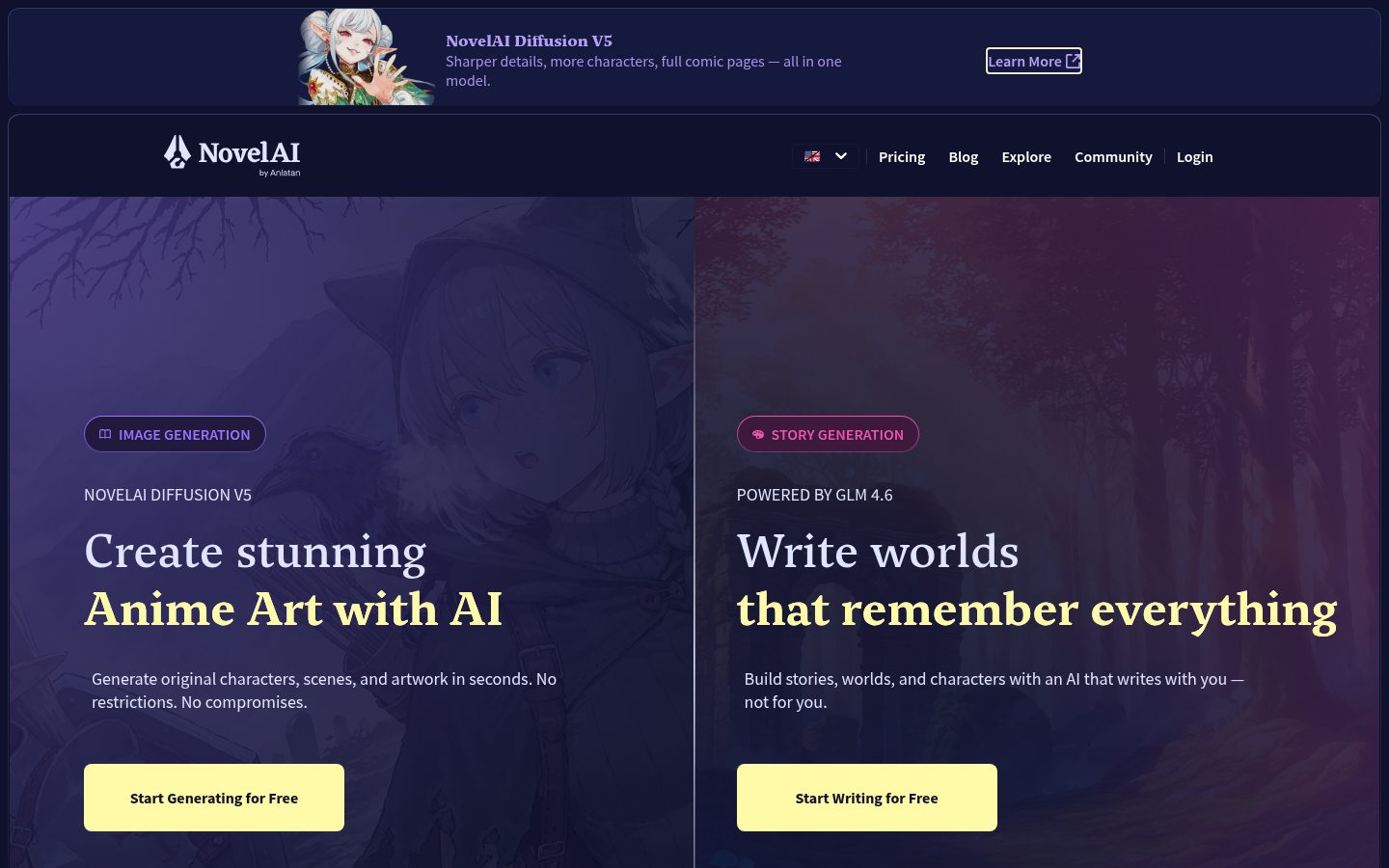
NovelAI
- Lorebook and adjustable context keep factions and names stable
- You author characters instead of browsing a public bot catalog
- Few content restrictions compared with mainstream assistants
- Anime-style image generation under the same account
- No permanent free tier, only a one-time 30-generation image trial
- Text quality and context size scale with the subscription tier
- Image generation is anime-focused, not a general illustration tool
Closest to what a GM actually wants from a character engine: memory you control.
AI Dungeon
- Type any premise and the narrator improvises the scene
- Story Cards, Plot Essentials and Author's Notes steer tone
- Large library of published scenarios and an active community
- Free Wanderer tier trims long sessions with a 4k context
- Credit-based tiers reserve the strongest models for Mythic and Ultimate
- Coherence still drifts in very long sessions without careful summaries
Strong for improvised solo scenes, expensive once you need real continuity.
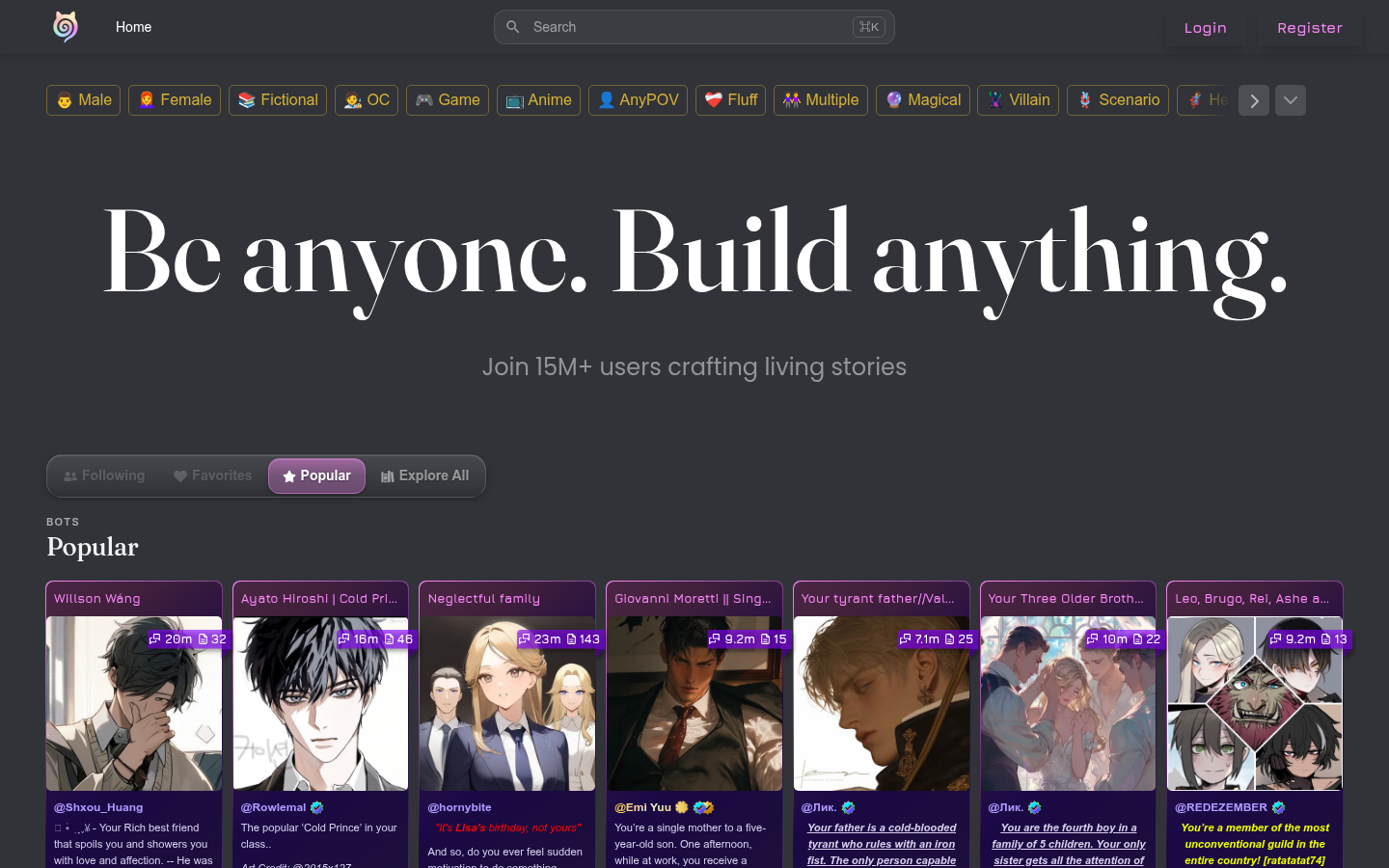
Janitor AI
- Free tier with no message cap and a huge public bot library
- Bring-your-own-model option for people who already pay for an API
- Official iOS and Android apps alongside the web client
- Quality and tone vary a lot from one community bot to the next
- Free-tier memory is short, so long campaigns need janitor+
- Moderation and safety tooling is lighter than at mainstream platforms
The most direct Character.AI swap, with the same drift problems on long arcs.
SillyTavern
- World Info lorebooks keep lore persistent across chats
- Group chats put several NPCs in one room at the table
- Free, open source, with extensions for summaries, voice and images
- Setup is on you: Node.js 20+, a model backend and your own security
- No hosted service, no mobile app and no catalog to browse
- Chat history and API keys sit in plain text on the host machine
The deepest control in the group, paid for in setup time.
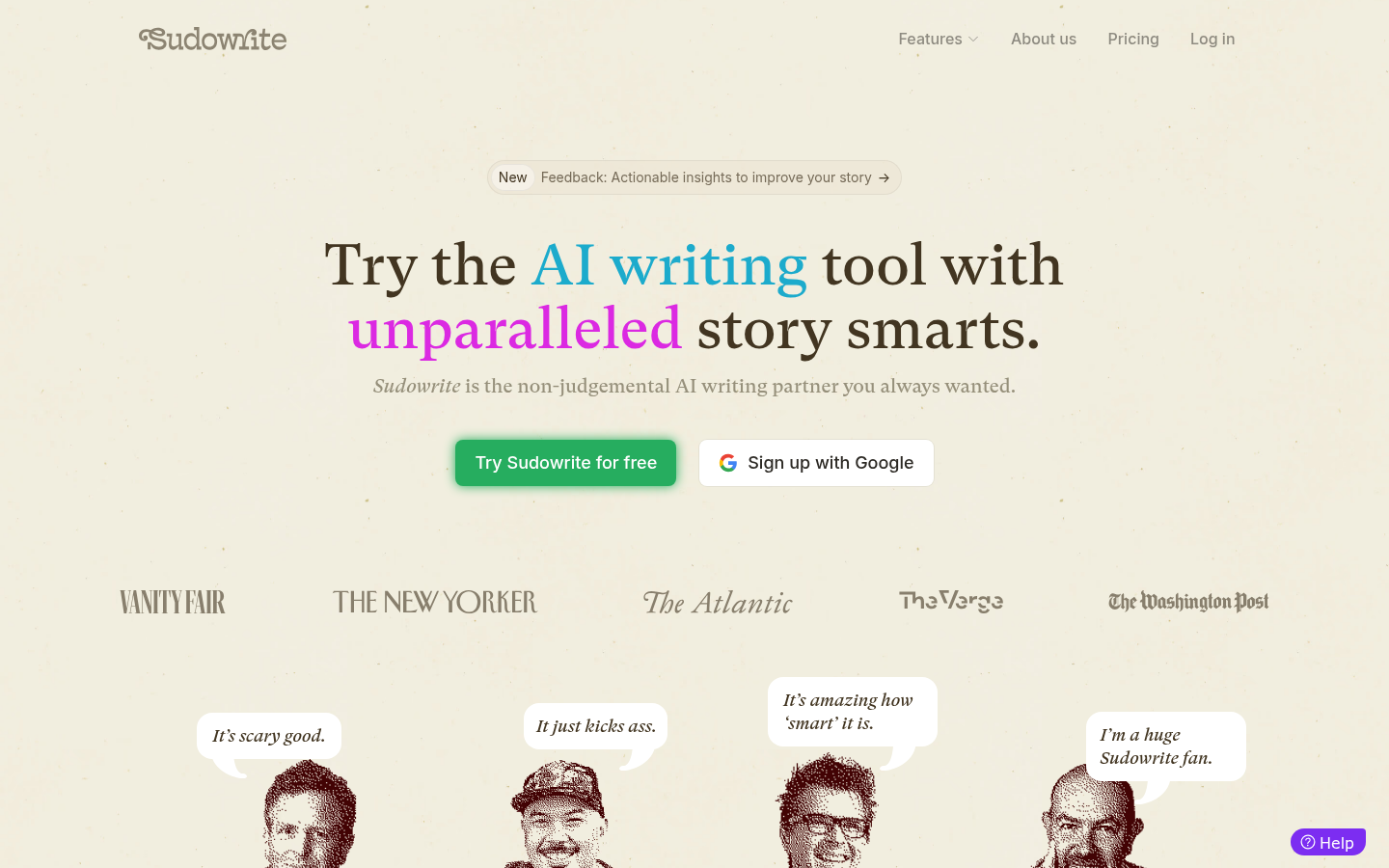
Sudowrite
- Story Bible keeps characters and settings consistent across scenes
- Write, Describe, Expand and Rewrite tools work at scene level
- Feedback tool gives actionable critique on each draft
- Fiction only, with no live character chat to talk to
- No export formatting, cover design or audiobook tools
- Some users report billing mix-ups when cancelling a subscription
Not a chat partner: pick it when the character has to land on the page.
Verdict
NovelAI is the strongest Character.AI alternative for worldbuilders because its lorebook and context memory keep canon stable across a long campaign. SillyTavern goes further on control if you accept the setup, and Janitor AI is the nearest like-for-like swap for casual chat. Canon is a promise, and only the tools with real lore memory keep it.
How we tested
This is a desk comparison, not a blind output test. We compared the official pricing and plan pages of each product as of November 2026, their published feature documentation, and aggregated customer feedback on G2 and Trustpilot where it exists (NovelAI shows 4.6 out of 5 on G2; Character.AI's Trustpilot page is dominated by negative reviews about moderation and the free tier). Scores from 0 to 5 are editorial judgments of fit for one job: keeping a persistent cast of characters and lore usable across a long tabletop campaign or manuscript. We weighted memory tools, ownership of characters, price at the first paid tier and moderation, and we did not weight image quality or app polish. None of these products is an affiliate partner of this site.