Godot vs Unity for Worldbuilders Making a Narrative RPG
Summary
Godot vs Unity comes down to what you are building and how long you want to own it. For a solo worldbuilder shipping a narrative RPG, Godot is free under the MIT license, light to install, and strong in 2D. Unity is free below $200,000 in revenue, then costs $2,310 per seat each year, but it offers deeper console support and a larger asset store. This comparison covers licensing, scripting, dialogue tooling, platforms and ecosystem.
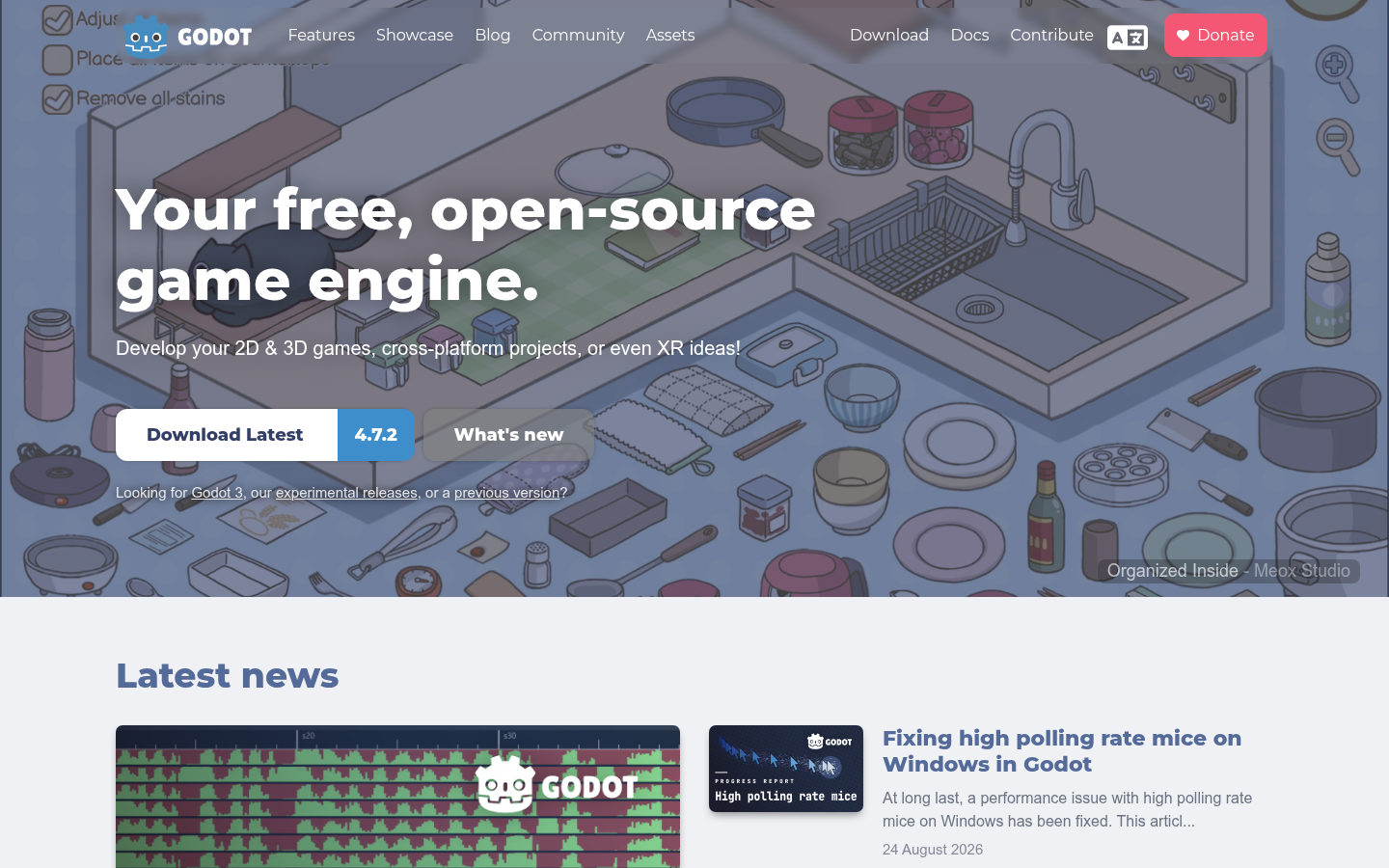
Godot Engine
- Free under MIT with no revenue threshold, royalty or seat fee, so costs never change as the game grows
- Light editor and a Python-like GDScript give beginners a playable prototype quickly
- Dedicated 2D renderer and node-and-scene structure that maps naturally onto locations and factions
- Open source, so the terms cannot be rewritten and blocking bugs can be inspected
- Console export relies on third-party porting services that are costly and less documented
- Smaller asset library and fewer ready-made dialogue systems than Unity offers
- 3D tooling and polish still trail Unity for high-fidelity scenes
The safer default for a solo creator with a lore bible and a small budget.
Unity
- Established console certification pipeline and strong mobile support
- Largest asset store, tutorial base and pool of developers who already know the engine
- Mature 2D and 3D toolsets plus official packages for localization and more
- ScriptableObjects make it easy to store lore as data outside the code
- Pro costs about $2,310 per seat per year once revenue or funding passes $200,000
- The 2023 Runtime Fee episode showed that a vendor can change terms after you build on it
- C# only and a steeper learning curve for people who have never written code
The stronger pick when platform reach or 3D matters more than cost.
At-a-glance
| Godot Engine | Unity | |
|---|---|---|
| Price and licensing | Free forever under the MIT license, no revenue cap, no royalty, no seat fee | Free under $200,000 in annual revenue or funding, then Unity Pro at about $2,310 per seat per year |
| Scripting languages | GDScript, C# through .NET, C++ through GDExtension | C# only |
| 2D and 3D strength | Dedicated 2D renderer, very strong for sprites and tilemaps. 3D is good and improving each release | Mature in both 2D and 3D, with deeper lighting and rendering options for high-fidelity scenes |
| Dialogue and localization | Dialogic plugin, Yarn Spinner and ink support, built-in CSV and gettext translation | Largest market of dialogue assets, Yarn Spinner and ink integrations, official Localization package |
| Platforms and consoles | Desktop, mobile and web. Consoles only through third-party porting services | Desktop, mobile, web and an established first-party console pipeline, plus XR |
| Ecosystem and user ratings | Smaller asset library, open source, Capterra 4.3 out of 5 from about 29 reviews | Largest asset store and tutorial base, Capterra 4.6 out of 5 from about 845 reviews |
Verdict
Godot is the stronger default for a worldbuilder building a narrative RPG alone or with a tiny team: no licensing exposure, a light toolchain and excellent 2D. Unity wins when console certification, mobile-first release, 3D polish or hiring from a large talent pool matters more than cost. Keep your lore in plain data files and a portable dialogue format, and the choice stays reversible.
How we tested
This is a desk comparison, not a hands-on benchmark. We did not build the same game in both engines for this piece. We compared each vendor's published pricing and license terms, the official documentation for scripting, localization and console export, the current Godot stable release shown on its homepage (4.7.2), and aggregated Capterra ratings (Godot 4.3 from about 29 reviews, Unity 4.6 from about 845), cross-checked against several 2026 roundups for Unity Pro pricing. Scores run from 0 to 5 and are editorial: they rate fit for a solo worldbuilder making a narrative RPG, not engine quality in general. Prices change, so confirm them on each vendor's site before you commit.
Godot vs Unity, for a worldbuilder turning a campaign setting into a narrative RPG: Godot wins. It costs nothing at any revenue level, its 2D tooling suits dialogue-heavy games, and the MIT license means the terms cannot change under you. Unity is the right call if you need console certification, mobile reach or a large hiring pool. For a solo creator with a lore bible and a small budget, Godot is the safer foundation.
The problem both engines are solving for you
Picture the moment. Your campaign setting has run for forty sessions, the Codex holds 200 entries, and a player asks whether there is a game version. You open a browser, type godot vs unity, and land on forty articles written for studios with programmers. None of them ask what you actually have: a world, a pile of branching dialogue, and no engineering team.
This comparison is written for that person. It treats the engine as a container for lore, not as a technology bet. The question is which one holds a narrative RPG without fighting you, and which one you can still afford to use when the project grows. Both are mature, both ship real commercial games, and neither is a wrong answer. They fail in different places.
One framing note before the details. Everything below is a desk comparison built from official pricing pages, documentation and aggregated user ratings. We did not build the same game twice for this piece, and the scores reflect fit for a worldbuilder, not engine quality in general. The methodology section spells that out.
Licensing and cost: where the two engines really differ
Godot is released under the MIT license. There is no revenue threshold, no per-seat fee and no royalty, so a project that earns nothing and one that earns a fortune cost the same: zero. Because the license is MIT, any copy you hold stays usable and redistributable forever, even if the foundation behind Godot changed course.
Unity is free through Unity Personal while your organization earns or is funded below $200,000 a year. Above that line you move to Unity Pro, which several 2026 sources price at $2,310 per seat per year after a 5 percent increase in January 2026. Unity publishes the current tiers on its pricing updates page, and you should read it before committing, because the numbers have moved before.
That history matters to a creator. In 2023 Unity announced a per-install Runtime Fee, then cancelled it after a backlash. Nothing is charged today, yet the episode showed that a commercial vendor can rewrite the deal after you have built on it. A solo worldbuilder who plans to sell a campaign setting as a game for years should weigh that risk honestly, without treating it as a scandal. The current terms are reasonable. The point is that Godot cannot change them and Unity can.
Scripting and project structure
Godot gives you GDScript, a Python-like language written for the engine, plus C# through .NET and C++ through its extension system. GDScript is the reason many first-time developers get a playable room within a weekend. Scenes and nodes also map neatly onto how a GM already thinks: a tavern is a scene, an innkeeper is a node inside it, and a faction can be a reusable resource.
Unity uses C# exclusively. That is a strength if you already write C# or want to hire from the largest pool of game programmers. It is a cost if you have never coded, because the learning curve is steeper and the editor exposes far more systems before you need them. Unity's ScriptableObjects are an excellent way to store lore as data, factions, items and quests living outside the code, and the pattern is worth borrowing even if you choose Godot, where custom Resources do the same job.
For a narrative RPG, the practical test is where your lore lives. If each faction, location and NPC is a data file the dialogue system reads, either engine works. If you hard-code lore into scripts, you will regret it on either one.
2D, 3D and the look of the realm
Godot has a dedicated 2D renderer rather than a 3D one flattened to two dimensions, and that shows in pixel-accurate sprites, tilemaps and UI. Many dialogue-heavy RPGs are 2D or 2.5D, which is where Godot is at its most comfortable. Its 3D has improved with each 4.x release (the current stable version on the Godot homepage is 4.7.2) but still trails Unity in tooling depth and polish for high-fidelity scenes.
Unity handles both well. Its 2D toolset is mature, and its 3D pipelines, lighting options and asset support are broader. If your setting calls for a lush 3D overworld, lots of cinematic cameras or XR, Unity has more tooling ready out of the box, and more tutorials covering each step.
Be honest about your art budget here. A solo creator rarely wins on 3D fidelity against a funded team, so the engine's 3D ceiling often matters less than whether you can finish the art at all. A stylized 2D game that ships beats a 3D prototype that stalls.
Dialogue, lore data and localization
This is where a worldbuilder should spend the most time, because narrative RPGs live or die on their branching text. Neither engine ships a full dialogue editor in the box. Both rely on community and third-party tools, and the main options work across the two.
Yarn Spinner and inkle's ink are the two established scripting languages for branching dialogue, and each has integrations for Unity and community or official support for Godot. Godot also has Dialogic, a community plugin that gives you a visual timeline editor. Unity has a larger commercial asset market for dialogue systems, which means more finished options but also more paid ones.
Localization deserves a mention because your setting may reach readers beyond one language. Godot includes a built-in translation system with CSV and gettext support, so every line of lore can be translated without leaving the editor. Unity offers an official Localization package that is more featured and also more complex to set up. For a small team, the simpler path is often the one that gets finished.
Platforms, consoles and the business of shipping
Both engines export to desktop, mobile and the web. The gap opens at consoles. Unity has an established first-party certification pipeline for the major platforms. Godot reaches consoles through third-party porting services, which are real but less documented and can cost thousands per title; the Godot console documentation explains the route.
If your plan is a Steam release or an itch.io page, this gap barely touches you. If a console launch or a mobile-first release is the goal, it is the strongest argument for Unity and should override the cost advantage. Think about where your audience already plays your campaign setting before you decide.
Ecosystem, community and what users report
Unity's ecosystem is larger. Its Asset Store has been accumulating for over a decade, the tutorial library is huge, and job listings that mention Unity far outnumber those that mention Godot. On Capterra, Unity averages 4.6 out of 5 from roughly 845 reviews, which reflects broad satisfaction among a very large user base.
Godot's ecosystem is smaller but more open. Capterra lists Godot at 4.3 out of 5 from about 29 reviews, a much thinner sample, so treat that number as a hint rather than a verdict. Reviewers repeatedly praise how lightweight it is to install and how quickly a beginner can reach a working prototype. The community also moves fast, and the engine's source is public, so a bug that blocks you can in principle be fixed by you.
For a worldbuilder, the community question is simple. Unity has more answers on the shelf. Godot has a friendlier, flatter learning slope, and you will find enough examples for narrative games to get started.
Who should choose which
Choose Godot if you work solo or in a very small team, plan a 2D or 2.5D narrative game, want zero licensing exposure, and value starting from an empty project quickly. It matches the way indie creators build: slowly, over years, alongside other work.
Choose Unity if you already write C#, need consoles or mobile as first-class targets, want the deepest asset market, or expect to hire contractors who already know the engine. It is also the safer pick when a publisher or employer will ask what tools you used.
Neither choice locks your lore in. If your Codex lives in plain data files and a dialogue format like Yarn or ink, you can move between engines later at a cost of weeks, not years. That portability is the best protection against picking wrong.
Final verdict
For the reader this site serves, a world builder with a campaign setting and a modest budget, Godot is the stronger default. It removes licensing risk, keeps the toolchain small and suits dialogue-driven 2D games. Unity earns its place when platform reach, 3D polish or hiring needs outweigh cost. Pick the engine that fits the game you can finish, and build the world so the story has somewhere to land.