Aztec Mythology Gods: A Worldbuilder's Field Guide
Summary
Aztec mythology gods are overlapping forces, not one-job deities. Huitzilopochtli is sun and war, Tezcatlipoca night and fate, Quetzalcoatl wind and learning, Tlaloc rain. They live inside a cosmology of four destroyed worlds, the Five Suns, and a temple, the Templo Mayor, that staged their myths in stone. For GMs and writers, the useful lessons are structural: keep the obligations, keep the duality, name your sources, and borrow the architecture of belief rather than the costume.
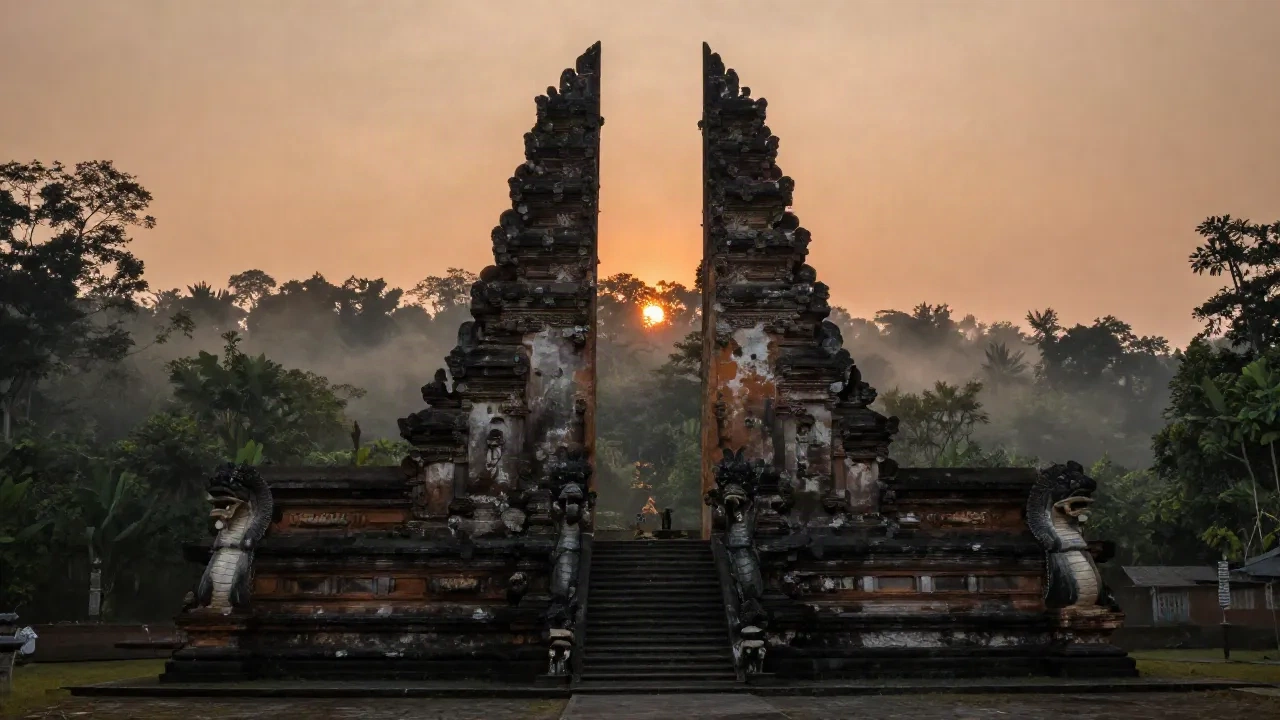
Aztec mythology gods are not a tidy pantheon with one job each. Huitzilopochtli carries the sun and war, Tezcatlipoca the night and fate, Quetzalcoatl wind and learning, Tlaloc rain. But the Mexica treated them as overlapping forces inside a universe that had already ended four times. If you build a realm from this material, borrow the structure, not the costume.
Why do the Aztec gods refuse to stay in their lanes?
A GM who opens a "list of Aztec gods" and assigns one domain per name is going to hit trouble by session three. Tezcatlipoca is a creator, a destroyer, a patron of kings and the lord of sorcerers. Quetzalcoatl is a god and also a culture hero. Tlaloc gives the rain that feeds the maize and the hail that kills it.
That slipperiness is not sloppy record keeping. The Mexica worldview was built on paired and shifting forces: day and night, wet and dry, creation and decay. A deity was a pressure on the world, and the same pressure could heal or ruin depending on the season, the ritual and the offering. Canon is a promise, and in Mexica thought the promise was conditional.
Skip the "god of X" index card. Write each deity as a verb with two edges.
Which Aztec gods actually carry the weight?
Four names show up in nearly every account, and they make a workable core cast.
Huitzilopochtli is the Mexica patron, a sun and war deity whose name is usually glossed as "Hummingbird of the South" or "Left-Handed Hummingbird". In the birth myth, his mother Coatlicue is impregnated by a ball of feathers on Coatepec, the Serpent Mountain. Her daughter Coyolxauhqui leads her siblings to kill her. Huitzilopochtli bursts out fully armed and throws Coyolxauhqui's dismembered body down the slope. By most accounts he was a modest figure before the Mexica rose to power, and the state elevated him as it expanded.
Tezcatlipoca, the Smoking Mirror, is the night sky, the jaguar and the black obsidian mirror in which a ruler could be shown what he would rather not see. He is a creator and a destroyer, and sources disagree on whether Quetzalcoatl is his brother or his rival. Both readings work at the table.
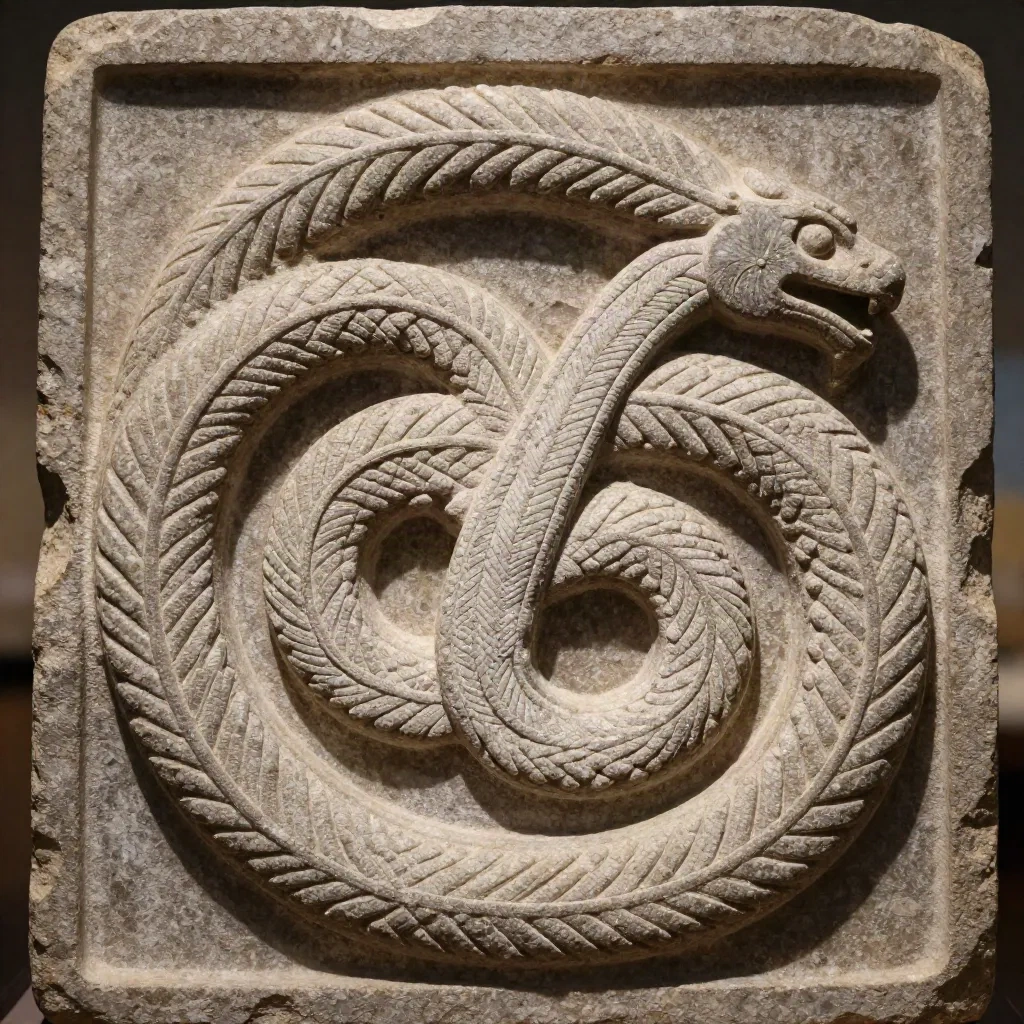
Quetzalcoatl, the Feathered Serpent, is tied to wind, learning and the priesthood. He is part deity and part cultural hero, which is exactly why he is so useful to a writer: a god who walked among people leaves a paper trail of anecdotes.
Tlaloc is the rain god, and the Templo Mayor in Tenochtitlan gave him one of its two summit shrines. Fertility and terror live in the same figure.
Who are the supporting gods worth keeping on the shelf?
The big four get the attention, but a campaign breathes through the second tier. Coatlicue, the mother of Huitzilopochtli, is an earth goddess whose skirt of serpents makes her one of the most striking figures in surviving sculpture. Chalchiuhtlicue, the water goddess of rivers and lakes, rules the Fourth Sun and sits close to Tlaloc without being his shadow. Xipe Totec, the Flayed Lord, is tied to spring renewal and the shedding of an old skin. Mictlantecuhtli presides over Mictlan, the underworld, which the dead reached only after a long road of trials.
Each of these hands you a small, specific plot engine. A river-town cult of Chalchiuhtlicue has a different relationship to flood season than a highland Tlaloc cult. A Xipe Totec festival is a calendar event with a built-in theme: what are you willing to shed? An underworld journey with nine stages is a ready-made dungeon structure, and it needs no monster stat block to feel dangerous.
Skip the temptation to give every minor god a full entry. Three or four sharply drawn secondary deities will do more for your Codex than thirty half-written ones, and players remember the ones who show up with a demand.
What does the Templo Mayor teach about faction design?
The Great Temple of Tenochtitlan sat on one platform with two shrines. The red shrine on the south side belonged to Huitzilopochtli, the blue shrine on the north to Tlaloc. War and water, tribute and harvest, side by side at the top of the same staircase.
At the foot of Huitzilopochtli's stairway lay the great stone of Coyolxauhqui, dismembered, so that anyone climbing saw the myth underfoot. The building was the story. Priests did not narrate Coatepec; they staged it every time someone walked up.
For a campaign, this is a design lesson with teeth. Give each faction one physical place where its founding myth is literally in the architecture. A cult of the rain god and a war cult that share a temple will have different worldviews and the same address. That tension generates more scenes than any rivalry written as a paragraph of lore.
How do the Five Suns turn a pantheon into a calendar of disasters?
The Mexica believed the current world is the fifth. Each earlier "sun" was ruled by a god and ended by a specific catastrophe. In the standard account summarised in the Five Suns overview, the first age under Tezcatlipoca ended when jaguars devoured the giants who lived in it. The second, under Quetzalcoatl, was swept away by wind, and the survivors became monkeys. The third ended in a rain of fire, the fourth in a flood that turned people into fish.
The fifth age, ours, belongs to Huitzilopochtli. It begins at Teotihuacan, where the gods gathered in darkness to choose a new sun. Two volunteers faced the bonfire. Tecuciztecatl, rich and proud, hesitated and turned back. Nanahuatzin, small and covered in sores, walked straight in and became the sun, with the other becoming the moon.
Details differ between sources, including which direction each god governs, so pick a version and commit to it. The point for worldbuilders is the shape: a cosmology where the past is a graveyard of failed experiments gives every living faction a reason to fear.
Where do we actually get this material, and how far can we trust it?
Most of what circulates as Aztec religion comes through Spanish hands. The richest source is the Florentine Codex, compiled by the Franciscan friar Bernardino de Sahagún with Nahua elders and former students of the Colegio de Santa Cruz de Tlatelolco. The Florentine Codex runs to twelve books, with Nahuatl text beside a Spanish gloss and roughly two thousand primary illustrations. Book 1 is devoted to the gods.
It is also the work of a missionary who called the religion idolatrous and framed the project as a manual for other friars. The text is sometimes contradictory, because it blends many voices. Treat it as a priceless witness with a bias, not a neutral encyclopedia.
Practical rule for the table: when two sources disagree about Tezcatlipoca's role, you are not facing an error to fix. You are looking at a ready-made schism between two temples. Use it.
How do you adapt Aztec mythology gods without flattening them?
Three habits keep a homebrew faithful and still playable.
First, keep the obligations. The Mexica universe ran on reciprocity: the gods gave the world, and people owed the world back. You do not need to import the sacrifice, but you do need an equivalent debt, something your setting's people pay so the sun keeps rising. Without it the cosmology is wallpaper.
Second, keep the duality. Give your Tezcatlipoca analogue a patron-of-kings face and a lord-of-sorcerers face, and let different NPCs worship different ones. Player characters should be unable to tell which face they are talking to.
Third, name your sources and your changes. If your Quetzalcoatl is a trickster in one chapter and a lawgiver in another, say in the Codex of your campaign which tradition each version comes from. Future you, at session forty, will be grateful.

Can AI tools help you build a pantheon like this?
They can speed up the drudgery and they cannot make the decisions. After testing several over a long campaign prep, the split is consistent: they generate fast, and the faction motivations still need a human pass.
NotebookLM is the one that earns a place in mythology prep, because you can load your own source excerpts and ask it only questions the sources answer. That keeps your Tezcatlipoca analogue from quietly absorbing details from a stranger's blog.
Sudowrite is useful once the cosmology is fixed and you need prose for a shrine description or a sermon. Feed it your decisions; do not ask it to make them.
NovelAI handles long-form lore with a consistent register if you load a lorebook first. Expect to rewrite the names it invents, because it drifts toward generic fantasy phonetics rather than Nahuatl structure.
For testing how a priest NPC answers an awkward question at the table, AI Dungeon can serve as a rough improv partner. It will not know your canon, so treat its output as a prompt, not a ruling.
Worth knowing: none of these understand Mexica religion. They echo what is common online, which skews toward the same four names and the same sacrifice clichés. Your sources are the check.
What would we steal, and what would we leave alone?
Steal the Templo Mayor principle: one building, two competing myths, one staircase. Steal the Five Suns as a calendar of past catastrophes your factions are still afraid of repeating. Steal the habit of treating gods as pressures with two edges.
Leave the costume. Feathered headdresses and a jaguar pelt on a villain are set dressing, and this audience can tell. Leave the "bloodthirsty empire" shorthand too, since it flattens a culture that also produced poetry, astronomy and elaborate law.
The open question is the one the Mexica themselves lived with: what does your world owe the sun, and who collects?