Norse Mythology Gods as a Faction Map for Your Campaign
Summary
Norse mythology gods are easiest to use at the table as a political system, not a roster. The Aesir and Vanir fought a war, settled it with a hostage exchange, and merged. Loki sits on both lists as an outsider counted as kin. Yggdrasil works as a graph of guarded crossings, and Ragnarok gives every faction a shared countdown. Start with six gods, give each a function, one want and one limit, and keep the motives human-decided.
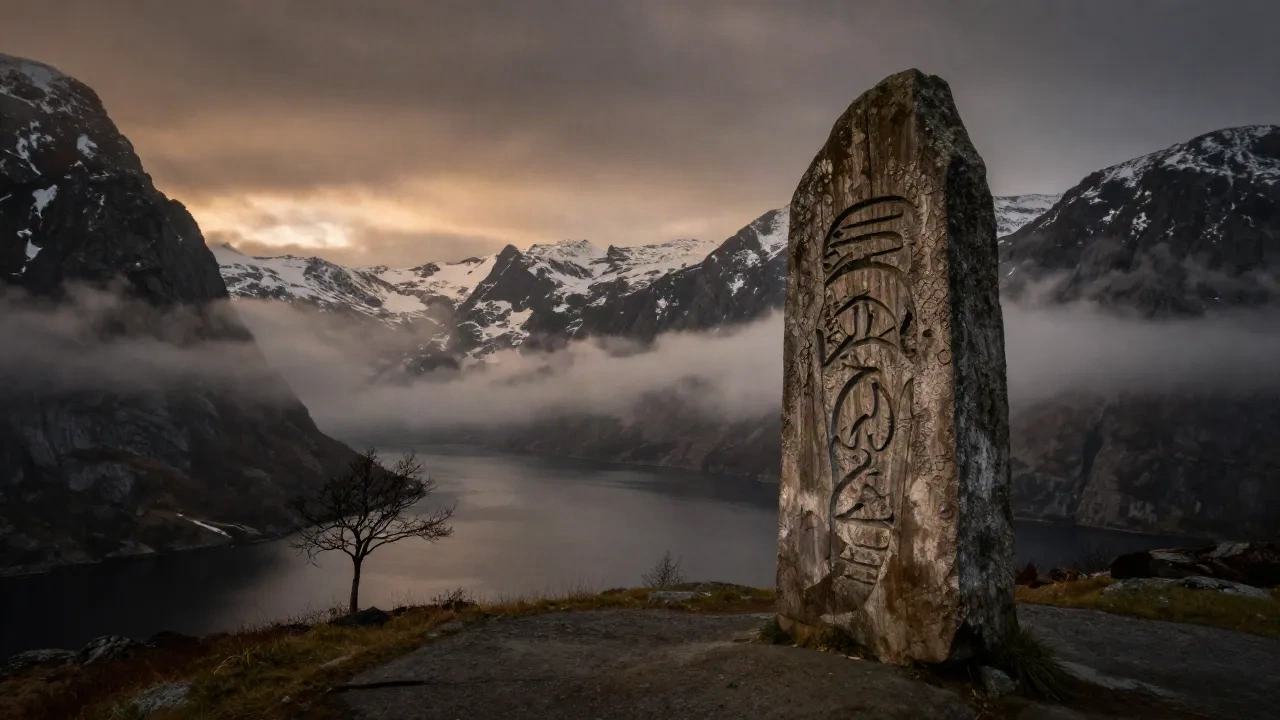
Norse mythology gods work best at the table when you stop treating them as a roster and start treating them as a political system. Two families, one war, a hostage exchange, an outsider who is counted as kin, and a prophecy that guarantees the whole arrangement ends badly. That is a faction map with a built-in clock, and the sources hand it to you almost ready to run. This guide covers who the gods are, where the evidence comes from, and which structures are worth lifting into a campaign Codex.
Where do the Norse mythology gods actually come from?
Almost everything we know passes through two thirteenth-century Icelandic sources. The Poetic Edda is an anonymous collection of older poems preserved in the Codex Regius, with about ten poems about gods and nineteen about heroes. The Prose Edda is Snorri Sturluson's handbook for poets, written as a structured retelling. Britannica's overview of Germanic religion covers the textual picture in more depth than we can here.
Here is the part that matters for a GM: Snorri wrote from inside a Christian culture, and he tidied. His lists of gods are cleaner than any living religion ever is. Canon is a promise, and the Eddas make a promise that the older poems do not always keep. When two sources disagree about who fathered whom, you are not looking at an error. You are looking at a setting that was never standardised, which means you have permission to pick.
Who are the Aesir, and why do they read like a ruling council?
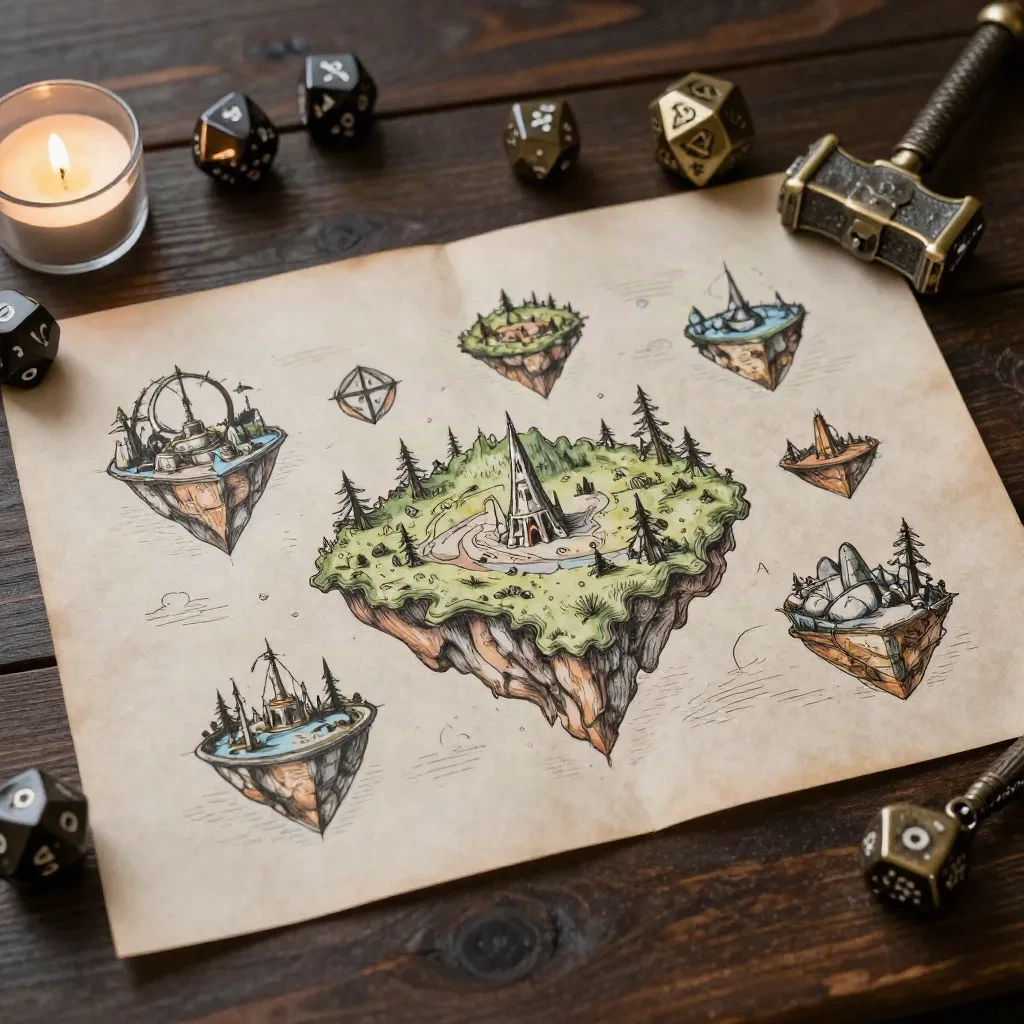
The Aesir are the established order. Odin sits at the top, a god of war, poetry and the dead who trades an eye for knowledge and spends most of his time gathering intelligence. Thor is the enforcer, the one who walks to the border and hits the problem. Baldr is the beloved one whose death sets the end of the world in motion. Tyr is the god of oaths, and he pays for one with his hand. Heimdall watches the bridge. Hodr, blind, becomes the instrument of the worst day in the mythology.
Read that as a list of offices rather than a list of personalities. Odin is the intelligence service and the legitimacy of the regime. Thor is the standing army. Tyr is the law, and the law costs something personal. Heimdall is early warning. Each god has a function a faction would plausibly have, and that is exactly why the pantheon plays well as an institution.
Skip the instinct to give every Aesir a full stat block. Pick three and leave the rest as rumour. A table can hold three gods with clear motives far more easily than twelve with overlapping domains.
What do the Vanir add that the Aesir cannot?
The Vanir are the other family, tied to fertility, prophecy and wealth. Njord and his children Freyr and Freyja are the names every source agrees on. They matter mechanically because of what happens next: the Aesir and Vanir fought a war, neither side won decisively, and they made peace by exchanging hostages. The Vanir became a subgroup of the Aesir afterward.
That single episode is a complete campaign seed. An old war, an uneasy merger, hostages who now live inside the other side's court and may or may not be loyal to the people who sent them. Scholars still argue whether the divide reflects an older fertility cult absorbed by a more martial one. You do not need to settle that. World History Encyclopedia's entry on Norse mythology is a reasonable starting point if you want to see where the debate sits.
Worth knowing: the hostage mechanic is the most reusable piece of the whole mythology. It gives you a way to put a faction's best person inside a rival's hall without a plot device, and it gives your players a reason to care about a political marriage or a ward who is more than a child.
Is Loki a god, a giant, or a design problem?
Loki is counted among the Aesir but is not born one. He is the child of giants, bound to Odin through an oath of blood brotherhood, and he behaves like a member of the family right up to the moment he does not. Every source that names the Aesir has to decide what to do with him, and that indecision is the interesting part.
From a systems view, Loki is the faction that sits on two lists. He has standing in the court and loyalties outside it. You cannot model him as a simple traitor, because he spends most of the surviving stories solving the gods' problems, usually problems he created. The craft lesson is to give your own double-agent NPC real utility to both sides. A betrayal lands harder when the table has relied on the character for ten sessions.
Reality check: do not run Loki as a pure villain from session one. The mythology does not, and the version that works at the table is the one that makes the party quietly dependent on him first.
How do the Nine Realms and Yggdrasil turn into a map?
The cosmology is a tree. Yggdrasil holds the realms: Asgard for the Aesir, Vanaheim for the Vanir, Midgard for people, Jotunheim for giants, Muspelheim and Niflheim for fire and ice, and the rest more loosely attested. Snorri lays out three roots that reach into different wells, and the structure is more suggestive than precise.
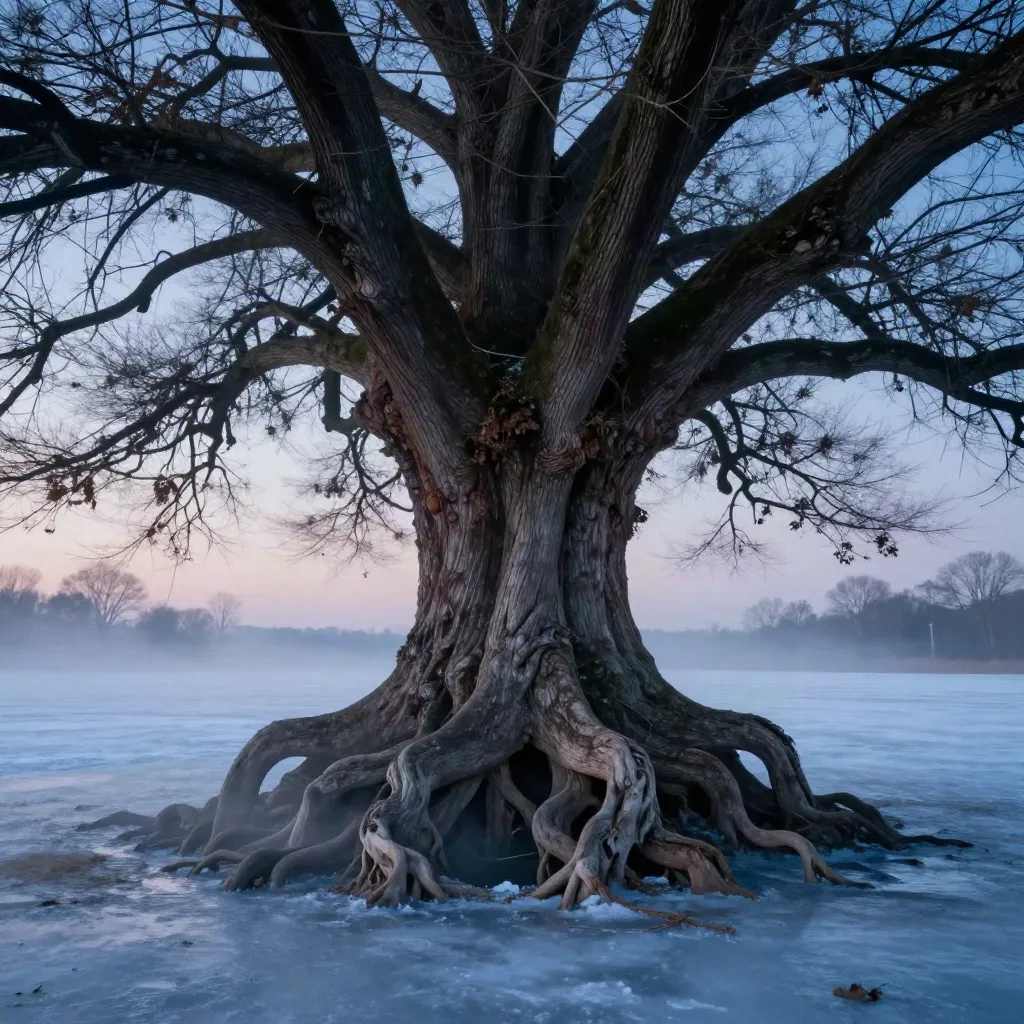
Do not try to draw this as a literal geographic map. Build it as a graph. Each realm is a node with its own physics, and the interesting content lives on the edges: who may cross, who guards the crossing, what it costs. Heimdall on the bridge is an edge guard. A road into Jotunheim is an edge with a toll in danger rather than coin. The Forge in any decent worldbuilding tool will generate nine names in seconds; what it will not decide for you is which three edges are closed and why.
For TTRPG designers working in D&D-compatible systems, the 5e SRD includes a Norse pantheon with domains and alignments, which gives you a fast way to attach clerics and divine magic to the structure above. It is a starting scaffold, not a faithful reading, so expect to rewrite the alignments once you decide which faction your campaign favours.
Which gods are worth skipping, and what does Ragnarok do to pacing?
Be selective. Thor is overexposed through modern retellings, and a table that has seen the movies will import expectations you cannot easily dislodge. If you want a thunder deity, consider using the idea of the border-walker instead of the name, and keep the name for a regional cult that has misremembered him.
Odin as a literal quest-giver is the other common trap. A god who has traded an eye for knowledge and hoards intelligence should be hard to meet and harder to read. Make the party deal with his agents, his ravens, his bargains, and let his motives stay opaque for the whole arc. Worth the splurge: Tyr. He gets far less table time than he should, and the oath-and-sacrifice theme gives a lawful character a real story.
Here is how it holds up at the table. The gods who read as institutions (Odin, Tyr, Heimdall) produce plots. The gods who read as celebrities (Thor, Loki as a personality) produce scenes. You want both, but you want the institutions to carry the campaign.
Ragnarok is the end of the pantheon, foretold in advance, and most of the gods die in it. In campaign terms that is a countdown that every faction knows about and each reacts to differently. Some try to prevent it. Some prepare for it. A few, the interesting ones, want it to happen on their terms.
The structural lesson is that a known, unavoidable end gives every scene a second meaning. The party can be sure it is coming and still not know how it arrives. Plant the signs early and plant them quietly: a harsh winter that runs longer than it should, a binding that frays, an oath that begins to cost more than it used to.
If you want to see how published games handle it, Osprey's Ragnarok line and Scion: Ragnarok both treat the end as a premise, one casting players as clans competing to become the next pantheon, the other as the children of the Aesir in the final years. Either is useful reading before you design your own timeline.
Can AI tools help you build a Norse-inspired pantheon?
They help with volume and they fail at consistency, which is the usual pattern. Used as assistants, with the GM deciding, they are fine for the first pass: epithets, regional cult names, rumours, the three-line summary of a minor deity.
NotebookLM is the better choice when you have already collected sources and want to query them without losing the citations. Load the Eddas and your own session notes, and ask it where two accounts of a god conflict. It will surface the conflict. It will not decide which version your campaign uses.
Sudowrite is aimed at prose rather than reference. If you are an author drafting a manuscript set in a Norse-inflected world, it is a reasonable drafting partner for scene-level work, but the faction logic still needs a human pass.
NovelAI gives you more control over style and a persistent lorebook, which suits a long campaign where names have to stay stable. The lorebook is where the Codex discipline lives: enter every god once, with one line on what they want, and let the tool read from that.
AI Dungeon is the quickest way to improvise a scene in Norse dress, but it drifts on lore across long sessions. Treat it as a sandbox for encounters, not a source of canon.
The rule that holds across all four: what the Forge actually generates is surface. The faction motives, the hostage politics, the cost of every crossing are decisions, and they stay yours.
How many gods do you need, and what do you keep?
Fewer than the source. The Eddas name dozens, and a table cannot track dozens. Start with six: three Aesir, two Vanir, and one outsider who sits on both lists. Give each a function (law, force, foresight, harvest, wealth, mischief), one want, and one thing they will not do. That is a faction map you can run on a single page.
Then add pressure. A war that was settled with hostages, an oath that costs a hand, a prophecy that ends the arrangement. Each is a thread the party can pull. You do not need to write the whole mythology. You need the three contradictions that make the pantheon unstable, because instability is what drives a campaign forward.
Now the keep list. Four things. The two-family structure with a hostage exchange. The outsider counted as kin. The graph-shaped cosmology with guarded edges. And the foretold ending that gives every faction a different relationship to the clock. Leave the costume details and the famous hammer if your table has seen too many films.
The gods of the North endure not because they are powerful but because they are a stable system under visible stress. Build that, and the names almost stop mattering. The lore either earns belief or it doesn't, and a pantheon that behaves like a government under threat earns it faster than any list of epithets.