Norse Mythology Names: A Worldbuilder's Field Guide
Summary
Norse mythology names fall into four distinct tiers: divine names, poetic epithets (kennings and heiti), mortal saga names, and cosmological names for creatures and places. Most worldbuilders use only the first tier. Understanding the compound structure of saga-era mortal names and the kenning logic that generated Odin's 200-plus epithets gives GMs and fiction writers a naming engine that produces authentic names without copying anyone else's work. The tier system is more useful than any list.
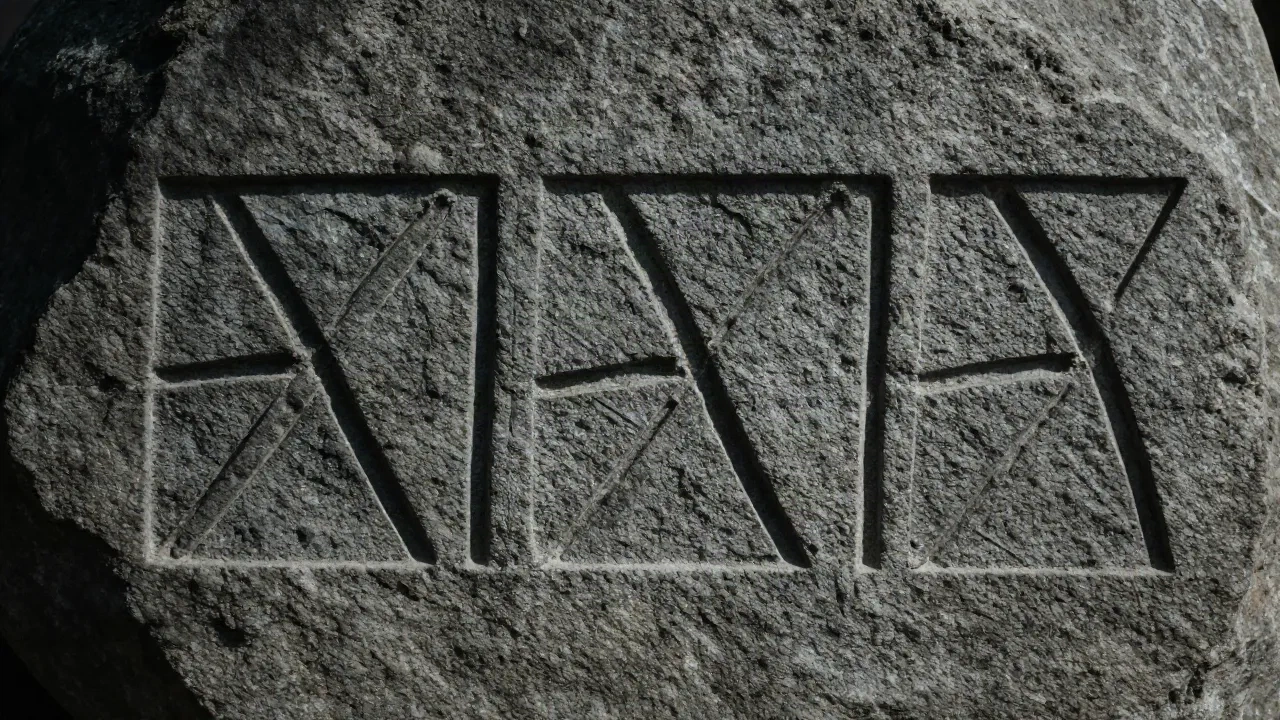
Norse mythology names are one of the most mined, and most misused, resources in worldbuilding. Every fantasy campaign has a Thorin or a Freya somewhere. The question is whether you are using the names or using the system, because the system is what holds up at the table after 40 sessions.
This is the distinction that matters: Norse naming convention is not a pile of sounds to sample from. It is a structured set of tiers, each with different semantic weight, different cultural functions, and different implications for the fictional world you are building. Once you understand the tiers, you can generate coherent, period-appropriate names for gods, mortals, factions, and places without reaching for the same ten names everyone else reaches for. Norse mythology names point to a list in most search results. This guide treats them as a system.
The Tier System Is More Useful Than Any Name List
The first mistake worldbuilders make with Norse mythology names is treating them as equivalent. They are not. There are at least four distinct categories in the Norse naming corpus, and each operates on different rules.
The first is the divine names: Odin, Thor, Freyr, Freya, Loki, Heimdall, Tyr. These are proper theonyms, names of beings understood to be divine or semi-divine. Their etymology is often straightforward: Freyr simply means "lord," Freya "lady," Tyr connects to the Proto-Germanic root for "god" or "sky." When you name a god in your setting after one of these, you are borrowing the full cultural weight of the original deity. Sometimes that is intentional. Often it shortcuts a decision you should be making consciously.
The second tier is the heiti and kennings: the poetic circumlocutions. Odin alone has over 200 recorded names, most of them functional epithets. Allfather. The Wanderer. Grimnir (the Hooded One). Yggr (the Terrible). Bolverk (the Evil-Worker). These are not alternate identities; they are names earned through action and function, describing what the being does or endures. This tier is where worldbuilding gold lives. A faction leader named Grimnir, a wandering arcane scholar called Yggr, a morally ambiguous mercenary going by Bolverk: all of these carry Norse mythological resonance without directly appropriating a deity name. The GM who reads the source material has access to these; the GM who searched "Norse names list" does not.
The third tier is the mortal saga names: Leif, Sigurd, Gunnar, Ragnar, Brynhildr, Astrid, Gudrun. These come from actual Norse and Icelandic naming conventions, governed by specific rules. Many are compound constructions: Sig-urd (victory-protector), Gun-nar (war-warrior), Brun-hildr (armor-battle). The structure is a compound of two meaningful elements, often drawn from a limited set of root concepts: battle (hildr, gunnr), victory (sigr), protection (vardr), fire (brandr), strength (styrr), wolf (ulfr), bear (bjarni). A worldbuilder who understands these roots can generate entirely original names that feel Norse without copying any existing name.
The fourth tier is the creature and cosmological names: Jormungandr, Nidhogg, Ratatoskr, Yggdrasil, Bifrost. These tend to be more complex in construction, often directly descriptive of function or appearance. Jormungandr means "enormous rod" or, more loosely, "great serpent." Nidhogg means "malice striker." Ratatoskr means "drill-tooth." For a worldbuilder naming a creature, a place, or a cosmological structure, this tier offers the richest construction logic: a name that is simultaneously a description.
The Overused Names and What Sits Just Behind Them
The names everyone reaches for: Odin, Thor, Freya, Loki, Ragnar, Leif, Bjorn, Astrid, Sigrid, Gunnar. These are not bad names. They are the first row of a very deep shelf, and most worldbuilders never look at the second row.
From the divine tier, the second row is considerably less visited. Baldur. Tyr. Freyr. Njord. Skadi. Idun. Bragi. Mimir. These appear in campaigns far less often, which is curious given their narrative potential. Tyr, a god of law and justice who sacrificed his hand to bind chaos, is exactly what a paladin order or a judicial faction should invoke. Skadi, a giantess who chose her husband by his feet and immediately regretted it, has more narrative texture than most generic fantasy gods. Idun, keeper of the apples of youth, is stolen and ransomed: her story is practically a campaign arc in three acts.
From the saga-era mortal names, the second row is richer still. The Icelandic Family Sagas run to 40 or more named characters per text and offer a far broader sample than the handful that made it into pop culture. Thordr. Grettir. Njall. Hrafnkell. Eirikr. Halldora. Thurith. Vigdis. These names survive in medieval Icelandic literature as actual historical figures or characters of historical fiction. Their sound is unmistakably Norse, but a player who has not read the sagas will not recognize them as borrowed.
The practical skip: naming a whole faction of Norse-inspired warriors with every member called some variant of Bjorn or Gunnar. Fifteen sessions in, players cannot distinguish NPCs by name alone. The naming pool has collapsed to two roots, and every new character sounds like a relative of the last. A coherent naming register drawn from the second row prevents this without requiring historical scholarship.
Worth knowing: the most commonly used names in the tier are overused because they are phonetically legible to English-speaking audiences. "Bjorn" is easy to pronounce; "Hrafnkell" takes a beat. That accessibility gap explains the clustering. A GM willing to gloss unfamiliar names once, then use them consistently, has access to the full depth of the material.
How Kenning Structure Works as a Naming Engine
A kenning is a compound noun phrase used as a figurative substitute for a simpler word. In Old Norse skaldic poetry, the sea is "whale-road," gold is "fire of the river," a sword is "wound-snake." The construction is typically modifier plus base noun, where the modifier adds a specific characteristic and the base noun identifies the underlying category.
For worldbuilding purposes, this is a productive naming engine. Take any concept: a fire mage, a city built on trade, a secret society. Apply kenning logic.
A fire mage becomes Brandr-visir (flame-guide), Elda-madr (fire-man), or the more poetic Sviga-Logi, which is an actual Old Norse poetic term for fire, literally "branch-flame." A trade city becomes Kaup-gardr (purchase-enclosure, which is literally what "Novgorod" means). A secret society becomes Dokk-menn (dark-men) or Leynimenn (concealment-men).
The construction does not produce perfect Old Norse, and that is fine. A worldbuilder is not writing scholarship. The goal is internal consistency: names that feel like they come from the same linguistic register, that a reader or player can encounter once and roughly intuit the meaning from context. Kenning logic gives you that register. It also gives you a system for generating new names that were not on any list, which is what you need after 30 sessions of naming factions, places, and minor NPCs.
When applied to non-Norse settings, the same structural logic can be transposed. The roots change but the compound architecture remains. This is why understanding Norse mythology names as a system rather than as a list matters: the system is portable into other mythological traditions, into invented language registers, into entirely original cultural frameworks. The skill transfers.
The Names That Signal Narrative Function
One pattern in the Norse material worth studying for worldbuilding is how names signal narrative function. Odin's heiti "Bolverk" (evil-doer) was the alias he used when working in disguise as a laborer to steal the mead of poetry. The name both conceals and reveals: it describes accurately what he is doing from a moral standpoint while sounding like an unremarkable human name to those inside the story.
This pattern of names functioning as narrative signals appears throughout the sagas. Egill Skallagrimsson: "Egill" is a personal name, but "Skallagrimsson" tells you his lineage, son of Skallagrim. Skallagrim itself means "bald Grim," a kenning-name that implies a specific physical characteristic. By the third generation, compound patronymic names carry genealogical and descriptive information within the name itself. Readers of the saga decode character relationships from the naming, before a line of exposition is necessary.
For a TTRPG campaign or fiction project, this opens an approach to NPC naming that embeds lore without requiring the GM to explain it. A character called Skjaldvigr (shield-war, implying a history as a defensive fighter) tells a player something before the GM speaks a word of description. A place called Brandrheim (fire-settlement) implies a history of burning or of forging. Canon is built name by name, and every inconsistency breaks it.
The practical test for a name's function: can a player or reader decode something useful from it? Not necessarily the Old Norse etymology, but the register and texture. Does this sound like a deity name, a mortal name, or a creature name? Does it suggest high status, common stock, a specific trade or history? If a name tells nothing, it is just a sound. Norse mythology names, at their best, are compressed lore.
Building a Consistent Naming Register Across Your Campaign
The practical problem most GMs face is not knowing what a single Norse mythology name means. It is maintaining consistency across 30, 40, 60 NPCs over three years of campaign. The human brain is not reliable at this in real time.
The approach that holds up: establish a naming register before the campaign starts. Decide which tiers your setting uses. If you are running a Viking-adjacent culture, establish whether characters use compound mortal names, kenning epithets, or both. Decide whether divine names are ever applied to mortals. Some historical cultures named people after gods as a sign of honor; others considered it presumptuous. The decision should be yours, made once and documented, not rediscovered inconsistently session by session.
Document the register. Not necessarily in full, but enough that when session 14 introduces a new NPC, you can check and know whether "Sigurdr" fits the culture or breaks it. A two-page Codex entry on naming conventions, written before the campaign starts, will save more session prep time than any generator. Include: which root concepts are available, which are reserved for high-status characters, which carry negative connotation, and five to ten example names by gender and social class.
For worldbuilders writing fiction, the same principle applies. If your world has a Norse-inspired culture, the naming register should be one of the first entries in your world document. Which roots are available, which are off-limits, which carry social meaning. Tolkien built his naming conventions from constructed languages outward. You do not have to go that far, but a register with 20 to 30 roots and ten example names is enough to stay consistent across a 300-page manuscript, and it takes an afternoon to build.
The register also prevents the most common naming failure in long-running campaigns: character names that drift register across sessions as the GM reaches for different sources. Session 1 NPCs sound Viking. Session 12 NPCs sound vaguely Celtic. Session 20 NPCs sound Roman. The setting fractures without the GM noticing, until a player asks why the northern tribes and the southern chieftains seem to share naming conventions. Build the world so the story has somewhere to land.
What AI Worldbuilding Tools Actually Help With Here
AI tools for worldbuilding are useful at specific stages of this process and less useful at others. Here is how it holds up at the table, field-report style.
Where they contribute: generating large volumes of plausible compound names from a root set you provide. If you have defined your register with compound mortal names and roots limited to battle, victory, and protection concepts, a tool like the Koroverse Forge can generate 50 candidate names quickly. You review, cull, and pick eight. That is a 40-minute task done in five minutes. The volume generation is genuinely useful when you have defined the parameters yourself.
Where they are inconsistent: understanding the semantic weight of existing Norse mythology names in context. A language model will generate a name that "sounds Norse" without necessarily knowing that Grimnir is a heiti of Odin and therefore should not appear as a throwaway tavern keeper's name unless you intend the implication. The decision about what a name means to the players remains a human judgment. What the Forge actually generates versus what you still have to decide yourself: the Forge handles volume, you handle significance.
World Anvil has good infrastructure for storing and cross-referencing named entities, which is where the consistency problem actually lives across long campaigns. The relationship maps and category systems let you track naming conventions across cultural groups and flag conflicts when you introduce a new NPC. NotebookLM is useful for tracking which names have already appeared in a manuscript and what patterns they establish across a long text. Neither replaces the naming register, but both help maintain it against the entropy of time.
The honest assessment: AI tools accelerate the mechanical part of naming, which is generating candidates, checking for duplicates, and sorting by register. The interpretive part, which is which names carry which weight and what story a name tells before the GM speaks, remains craft. Norse mythology names reward the worldbuilder who has read the source material. No generator substitutes for knowing why Bolverk is a name worth choosing.