How to Make a Game on Roblox: A Worldbuilder's Route
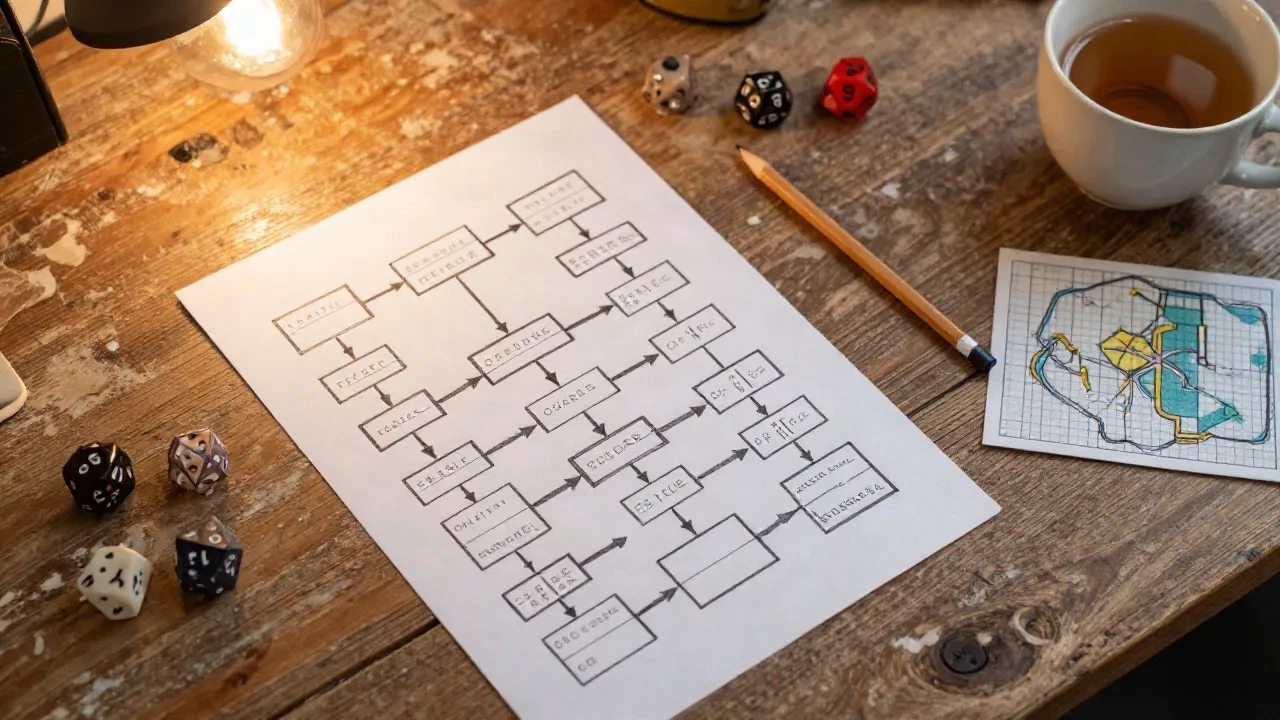
A practical route for GMs and fantasy authors: write a one-page design note, build one place in Roblox Studio, script one rule, playtest, then publish.
10 articles in Worldbuilding Craft.
A practical route for GMs and fantasy authors: write a one-page design note, build one place in Roblox Studio, script one rule, playtest, then publish.
Seven fanfic ideas built on gaps in the canon, plus a divergence test and a twenty-minute method for turning one line into a plot that survives chapter two.
A game design document template that starts as one page and grows only when playtests prove each mechanic, with pillars, lore rules and tool picks for indie and TTRPG designers.
Seven dnd campaign ideas that give your table a problem with a clock on it, plus a lean two-page prep method and honest notes on where AI tools help.
A practical craft guide to how to write fanfiction: choose a story shape, keep characters true to canon, handle lore, and publish your first fic.
80+ male fantasy names by mythological origin and archetype, with phonetic reasoning and naming system advice for worldbuilders running campaigns or drafting fiction.
Over 100 vampire names sorted by origin, era, and tone, with etymology notes and naming craft advice for fiction writers, tabletop GMs, and dark fantasy worldbuilders.
Procedural generation uses algorithms to build dungeons, terrain, and world elements from rules and randomness. A GM's guide to what it does and does not do.
Most GMs take session notes but miss what sessions actually create: promises, lore gaps, and open threads. Here is a system for capturing and closing them.
An objective summary captures what happened without interpretation. For GMs running long campaigns, it is the difference between a Codex that holds and notes that contradict themselves.